
 Jennifer Lindsay-Finan
1 min read
Why Live Learning Quality Breaks Down Without a Shared Standard
 Karen Vieth : May 4, 2026, 8:30:00 AM
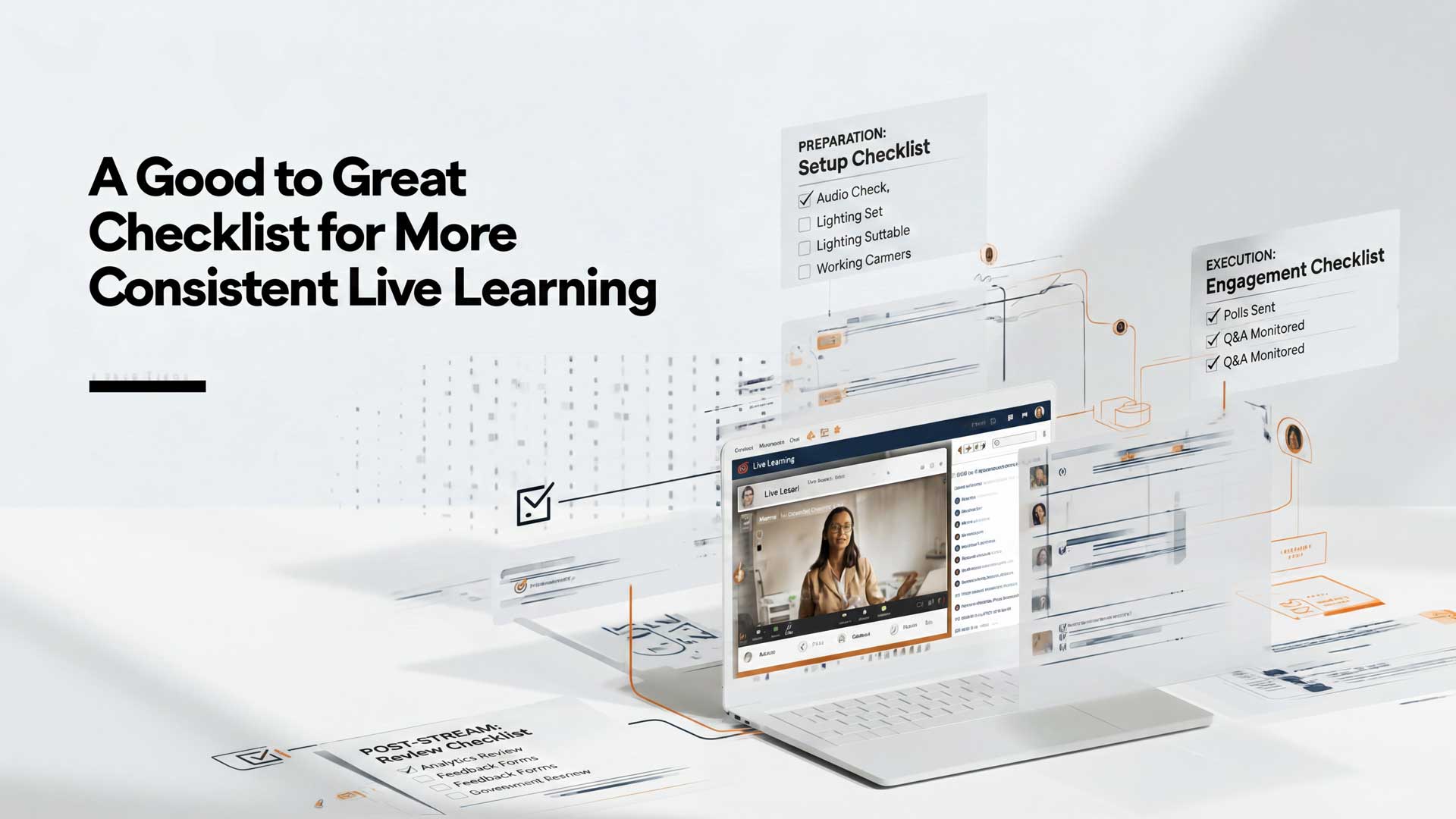
If you’ve ever facilitated a virtual classroom session that felt smooth, engaging, and energizing only to see the same program fall flat the next time, it’s not a talent issue, it’s a systems issue.
In live learning, inconsistency shows up quickly. One cohort leans in, contributes, and applies ideas, and then the next struggles through silence, technical friction, and unclear expectations. For practitioners working in virtual facilitation or hybrid learning environments, that gap creates rework, fatigue, and unnecessary pressure to “save” sessions in the moment.
The Good to Great Checklists for facilitators and designers offer something different: a way to reduce variability by making expectations visible, repeatable, and shared across roles.
At its core, the checklist defines what effective live learning looks like in practice, not in theory. It translates strong virtual classroom delivery into observable behaviors across facilitation and design.
For facilitators, that includes creating psychological safety, guiding interaction, and working seamlessly with a producer so learners never feel the technology.
For designers, it shows up earlier when clarifying behavioral outcomes, building interaction into the flow, and ensuring the session doesn’t collapse under too much content.
One of the first patterns we see across large rollouts is that inconsistency rarely starts in the session itself because it starts upstream. When design leaves too much open to interpretation, facilitators compensate in real time, and that’s where variability creeps in.
The checklist closes that gap by aligning what “good” looks like before anyone logs into the session.
Without shared standards, delivery friction becomes visible in predictable ways:
In our work with global programs, this typically shows up when two facilitators run the same session and get completely different outcomes. We've learned that standards don’t remove flexibility, they remove guesswork.
When facilitators know how to encourage contribution, when designers build in application moments, and when producers are integrated into the flow, sessions stop depending on individual heroics and start delivering more predictably.
The real strength of the Good to Great Checklists is how clearly they define responsibilities across roles. Instead of vague collaboration, they create a shared operating model.

Here’s how that difference shows up in practice:
Facilitator (in-session reality):
A facilitator using the checklist doesn’t just present content. They turn toward learners frequently, invite contribution, and allow space for thinking before moving on. You can see it in the rhythm of the session: less lecture, more interaction, and visible acknowledgment of participant input.
Designer (pre-session reality):
A designer aligned to the checklist builds that interaction into the experience ahead of time. Instructions are clear, activities are timed appropriately, and platforms are used intentionally, rather than as an afterthought.
Producer (learner-facing support):
A producer aligned to the checklist acts as an advocate for the learner experience. They ensure learners know where to be, how to participate, and what to do at each moment, often before questions arise. During the session, they manage tools, monitor participation, and respond to learner needs in real time so engagement is never derailed by confusion or friction. You notice their presence in how confident learners feel using the platform and how seamlessly the session supports full participation.
Across large programs, this alignment is what separates sessions that feel cohesive from those that feel improvised. When all roles operate from the same definition of success, learners experience continuity, not variation.
This is where the InQuire Engagement Framework™ becomes practical. It’s not just a philosophy about learner-centered experiences. It shows up when learners are consistently invited to think, respond, and apply, rather than passively consume.
Live learning is human-centered by nature as it depends on interaction, dialogue, and real-time adjustment. That’s also what makes it fragile when systems aren’t in place.
Without standards, facilitators carry the burden. They adjust on the fly, fill gaps in design, and troubleshoot production issues mid-session. Over time, that leads to uneven experiences and facilitator burnout.
With standards, the load is distributed: designers anticipate needs, producers support execution, and facilitators focus on engagement rather than recovery. But in a strong delivery system, you can see the difference immediately: Instructions are clear without explanation, activities flow without confusion and learners contribute without prompting. You may think it's just luck, but it's actually how design and facilitation work together in a coordinated way.
Start by using the Good to Great Checklist as a lens, not a scorecard. Review your next virtual classroom session and ask where expectations are implicit instead of explicit, where timing assumes rather than supports thinking, and where roles overlap instead of align. Download the checklist for your role (producer, designer, or facilitator).

If you want to go deeper, our upcoming webinar, “From Good to Great: The Practitioner Skills Behind Consistent Live Learning” walks through how to apply the checklist in real time. Bring a session you’re actively working on and use the checklist during the session to identify gaps, and revisit it afterward to refine your approach. That’s where consistency starts to take hold.

1 min read
Karen Vieth : May 4, 2026, 8:30:00 AM
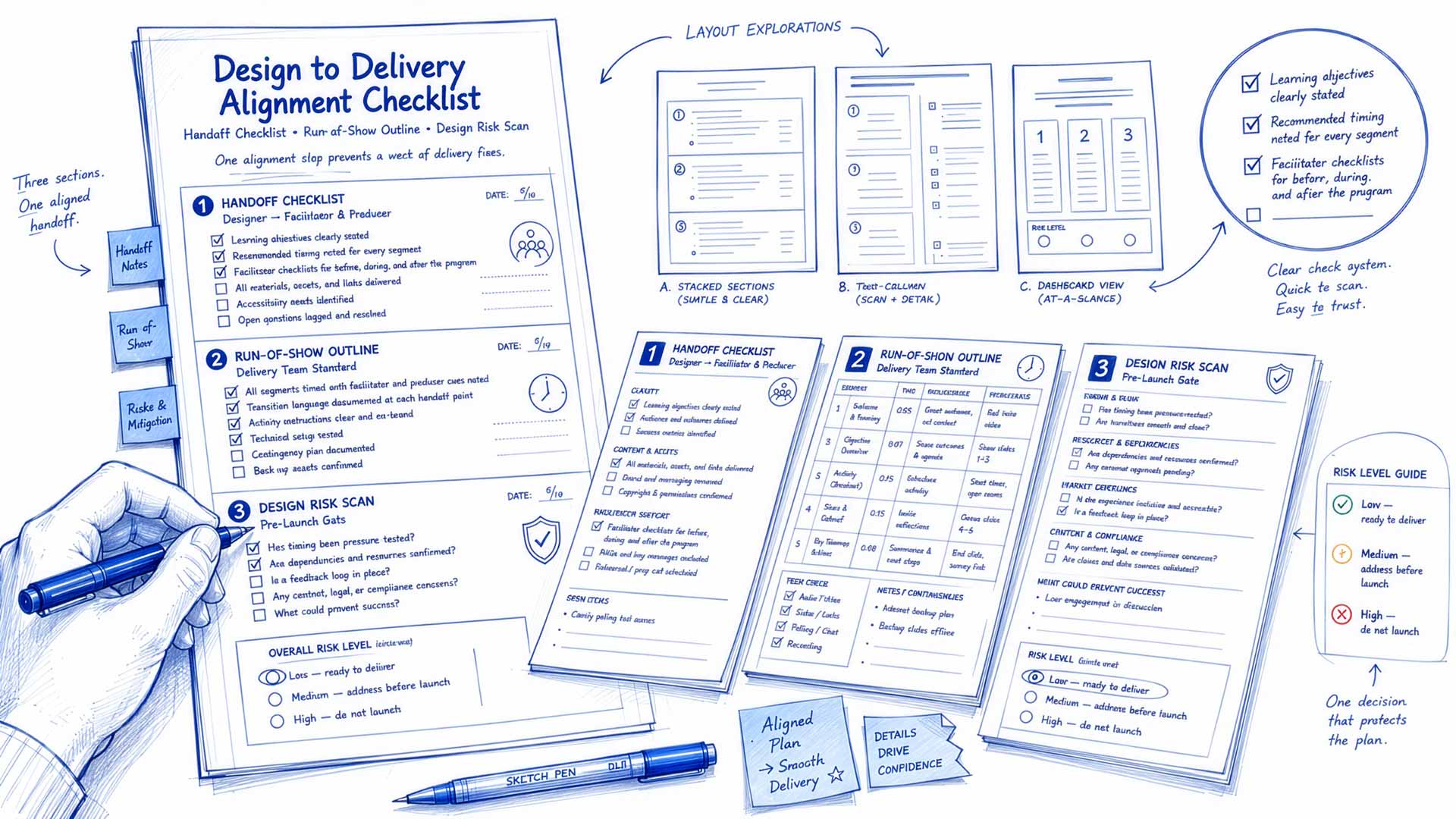
1 min read
 Jennifer Lindsay-Finan : Jun 8, 2026, 8:00:02 AM
1 min read
Jennifer Lindsay-Finan : Apr 13, 2026, 8:30:00 AM