
1 min read
Design for Learning Impact: Why Intent Must Hold
 Karen Vieth : Mar 9, 2026, 8:30:00 AM
6 min read
 Karen Vieth
:
Mar 2, 2026, 8:30:00 AM
Karen Vieth
:
Mar 2, 2026, 8:30:00 AM
When learning is mission-critical — when judgment, behavior, and trust are on the line — leaders choose learning with people.
The real question is whether the system around that choice is strong enough to deliver results.
Even when Level 1 evaluations tell us the learning experience was strong, a program may already be failing and we just don’t see it yet. That realization comes later, when on-the-job performance hasn’t actually changed. A program can feel successful in the moment with high participation, positive feedback, and capable facilitation and still produce uneven outcomes across cohorts. When that happens, leaders don’t assume learning is nuanced or situational. They assume it’s unreliable. Once reliability is in question, confidence erodes quickly.
That erosion is rarely caused by facilitation or content design alone. It points to something structural: the system surrounding live learning does not hold when conditions shift, scale increases, or delivery stretches across people, platforms, and regions.
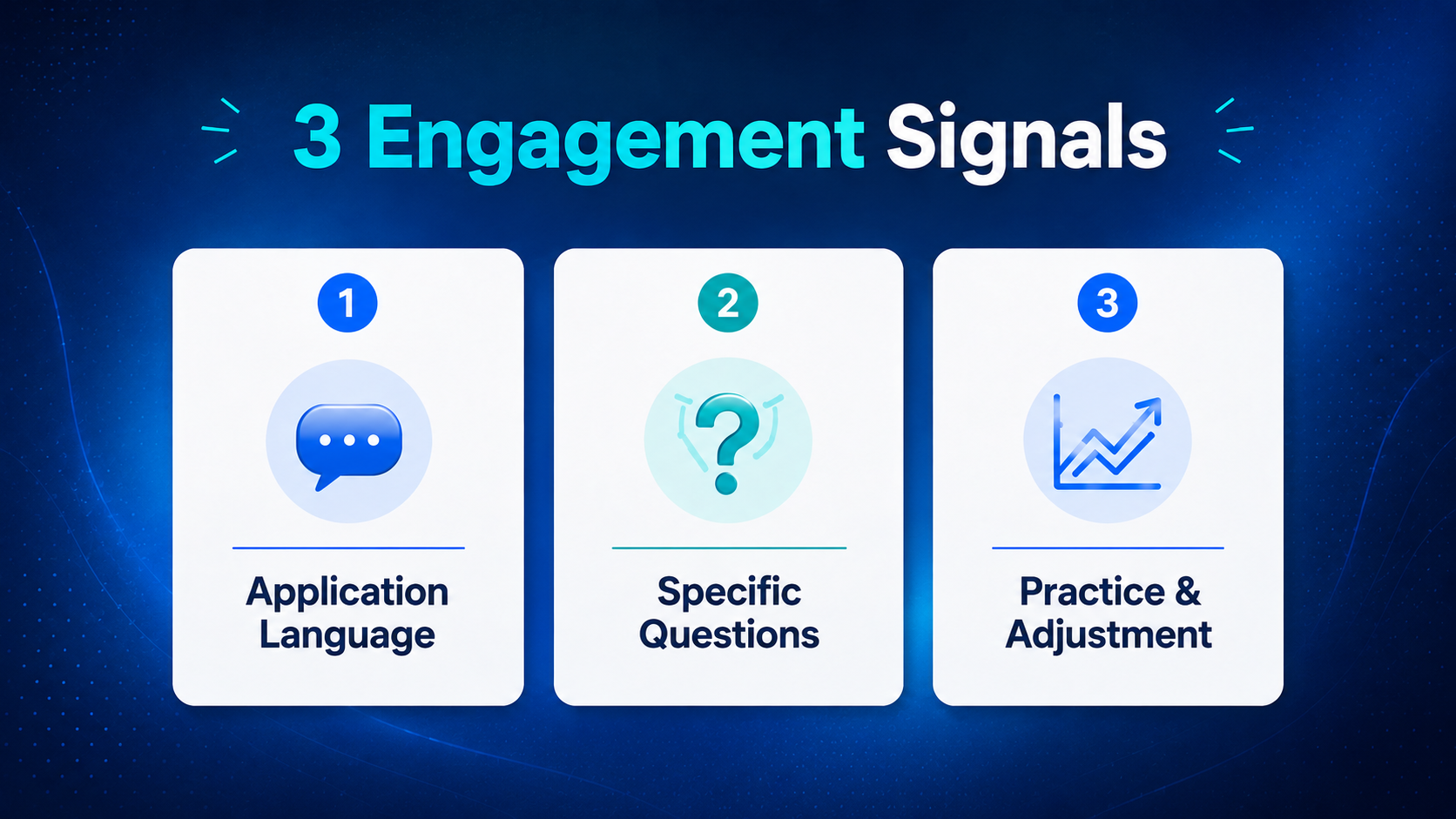
For those facilitating the live learning, this is where the shift from “a great session” to observable evidence begins. If the system is breaking, you’ll see it in the quality of behaviors, responses, and engagement signals. Attend our upcoming webinar, Turn Live Engagement Into Proof You Can Use, to learn how to identify these signals in real time using the InQuire Engagement Framework®.
Live learning, whether virtual, hybrid, or face to face, rarely fails at the pilot stage. It begins to fracture when programs scale and execution depends on consistency across facilitators, platforms, and support structures.
Many learning leaders recognize this pattern: A program works beautifully with a small group. The same design is rolled out more broadly, and then results begin to vary. Facilitators make reasonable adaptations that subtly change the experience. Support issues interrupt flow.
What initially looks like an engagement or content problem reveals itself as something deeper. The conditions required for learning to hold are no longer consistent.
Executives experience this breakdown differently. They don’t see thoughtful adaptation or contextual nuance; they see variance, and that variance makes learning performance unpredictable.
This is the core system problem. Learning impact breaks when execution depends on individual effort instead of shared, protected conditions.
Systems are not there to standardize people out of learning. They exist to protect human judgment, attention, and trust at scale.
In an era of automation, scalable content, and AI-generated learning assets, live learning remains the only moment where human judgment, attention, and practice converge in real time.
They exist so facilitators are not constantly compensating for what the system failed to provide, so learners can stay focused on the work instead of the platform, the process, or the interruptions, and so leaders can trust outcomes without hovering over every rollout.
When organizations see strong engagement but inconsistent results, the instinct is often to invest in people. While those investments are necessary, on their own, they rarely solve the problem.
What determines whether learning holds at scale is whether the system reinforces the same human conditions every time so people can focus on learning rather than compensating for gaps.
That is the problem that the Live Learning Formula was built to explain.
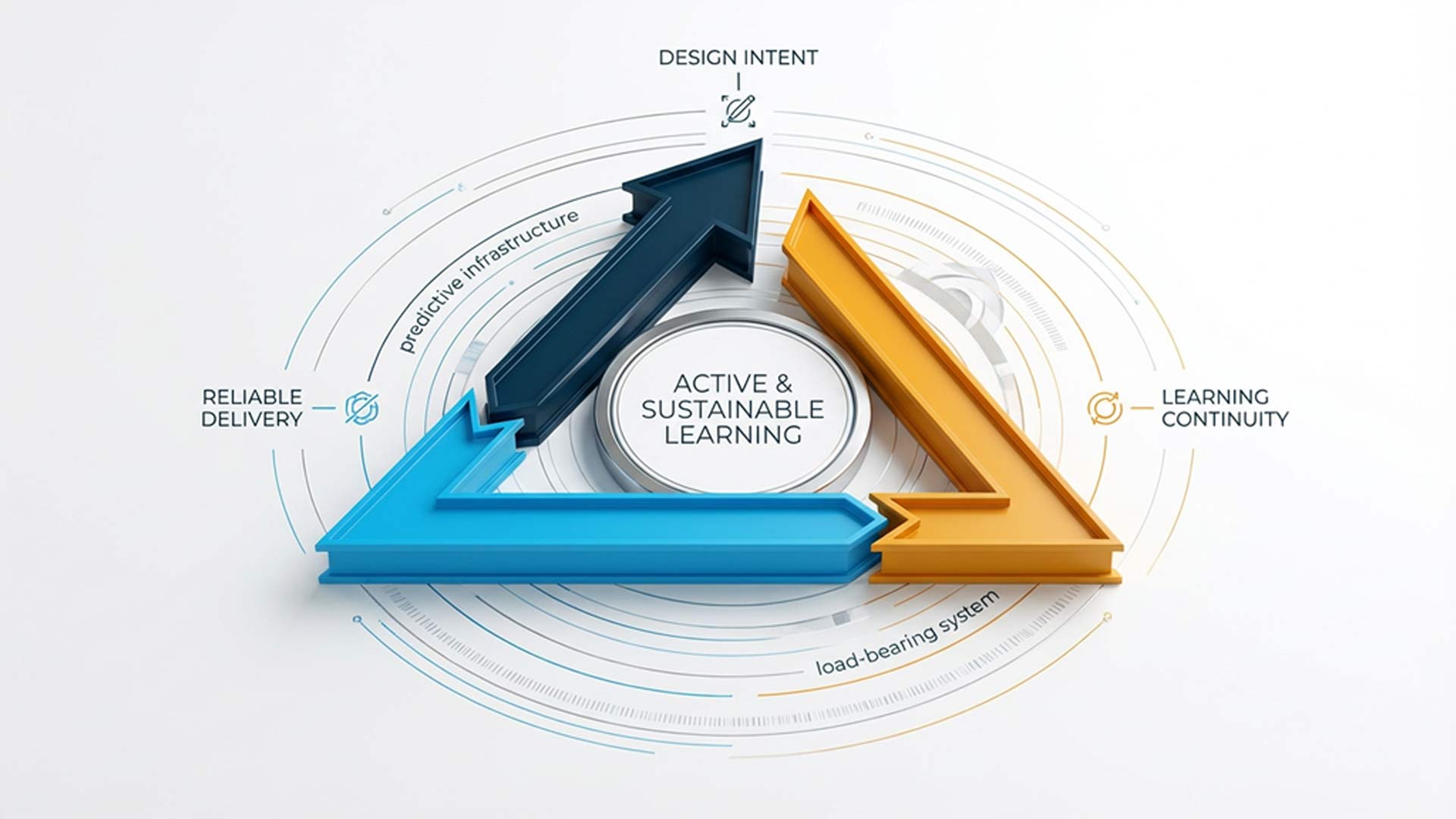
The Live Learning Formula defines when live learning can produce impact at scale by holding three conditions together:
At the center of the system is the outcome it exists to protect: learning that is active in the moment and sustainable over time, because learning is social, practiced, and shaped through real human interaction. Sustainable learning is not retention alone. It is supported application that is reinforced through coaching, practice, and feedback until new behaviors stabilize on the job.
The live moment is where learning becomes social, visible, and accountable. This is where practice is guided, meaning is shaped, and confidence is built in ways no asynchronous experience can replace.
These conditions are interdependent, so when one weakens, the others cannot make up for it. When the system holds, learning impact becomes repeatable and defensible. When it does not, results vary in ways leaders can feel long before they can explain.
The Live Learning Formula makes these fractures visible by showing where pressure enters the system and how it travels.
In this month's four-piece series, we’ll examine what breaks when design intent doesn’t hold, when delivery becomes unreliable, and when continuity disengages too early.
Most organizations don’t set out to weaken their learning systems. What happens instead is uneven investment. Facilitation skills improve while outcome clarity remains implicit. Content is refined, but delivery conditions are left unstable. Engagement techniques are layered in even as the underlying infrastructure stays fragile.
In the moment, learning can still feel successful, but the effects show up later, when transfer becomes inconsistent, reporting is harder to defend, and leaders respond by narrowing scope rather than extending reach.
The failure isn’t personal...It’s structural.
The Live Learning Formula makes these fractures visible by showing where pressure enters the system and how it moves.
Design is often discussed in terms of creativity or content quality. In a system view, design functions as predictive infrastructure.
Design establishes what learning is meant to change. It also defines how that change will be seen and measured. When intent is unclear or interpreted differently across teams, delivery inherits ambiguity, measurement becomes retrospective, and engagement turns into activity without evidence.
Learning leaders see this when programs feel energetic but results are difficult to articulate. Learners participate, but effort disperses because success was never clearly named. Stakeholders struggle to describe outcomes after the fact, even when sessions felt strong.
Clear design intent stabilizes the system by giving delivery and continuity mechanisms—not just facilitators—the same concrete outcomes to reinforce across sessions, cohorts, and time.
Facilitation is often treated as an individual capability, but in practice, delivery is a reliability issue.
When learning outcomes depend on who facilitates, variation is inevitable. Even experienced facilitators bring different interpretations, pacing, and emphasis. At small scale, this variability may be manageable. At enterprise scale, it becomes risk.
Leaders notice when results shift by cohort. In review meetings, the conversation quietly shifts from impact to containment. Programs stop expanding and confidence erodes.
Reliable delivery systems protect engagement conditions so facilitators can guide attention, shape meaning, and maintain psychological safety—doing the human work they were hired to do, not repairing the system mid-session.
Support and learning continuity often go unnoticed until results fade weeks or months later.
This layer includes production as the operational owner of learning conditions, protecting focus, flow, and consistency before, during, and after delivery, as well as managing technology, coordination, and session flow. It also includes the coaching, reinforcement, and follow-up that determine whether learning survives beyond the live moment.
When this system is weak, learning rarely fails all at once. It erodes quietly. Learners leave engaged but unsupported as they try to apply new behaviors. Without reinforcement, confidence dips, practice slows, and transfer weakens.
During delivery, instability shows up as increased cognitive load, focus fractures, and a decline in psychological safety. Learners disengage not because content lacks relevance, but because attention cannot be sustained long enough for learning to convert into performance.
These breakdowns are frequently misdiagnosed as facilitation or engagement problems. In reality, they are support failures.
In hybrid and virtual settings, these failures compound quickly. When coaching and continuity structures are missing, even strong design and delivery cannot prevent decay.
A protected learning continuity system absorbs friction during delivery and remains present after it ends. Learning energy is spent practicing, adjusting, and applying new behaviors rather than managing tools, technology, or uncertainty.
Without continuity mechanisms that remain present after delivery, learning decays not because people resist change, but because the system disengages too early.
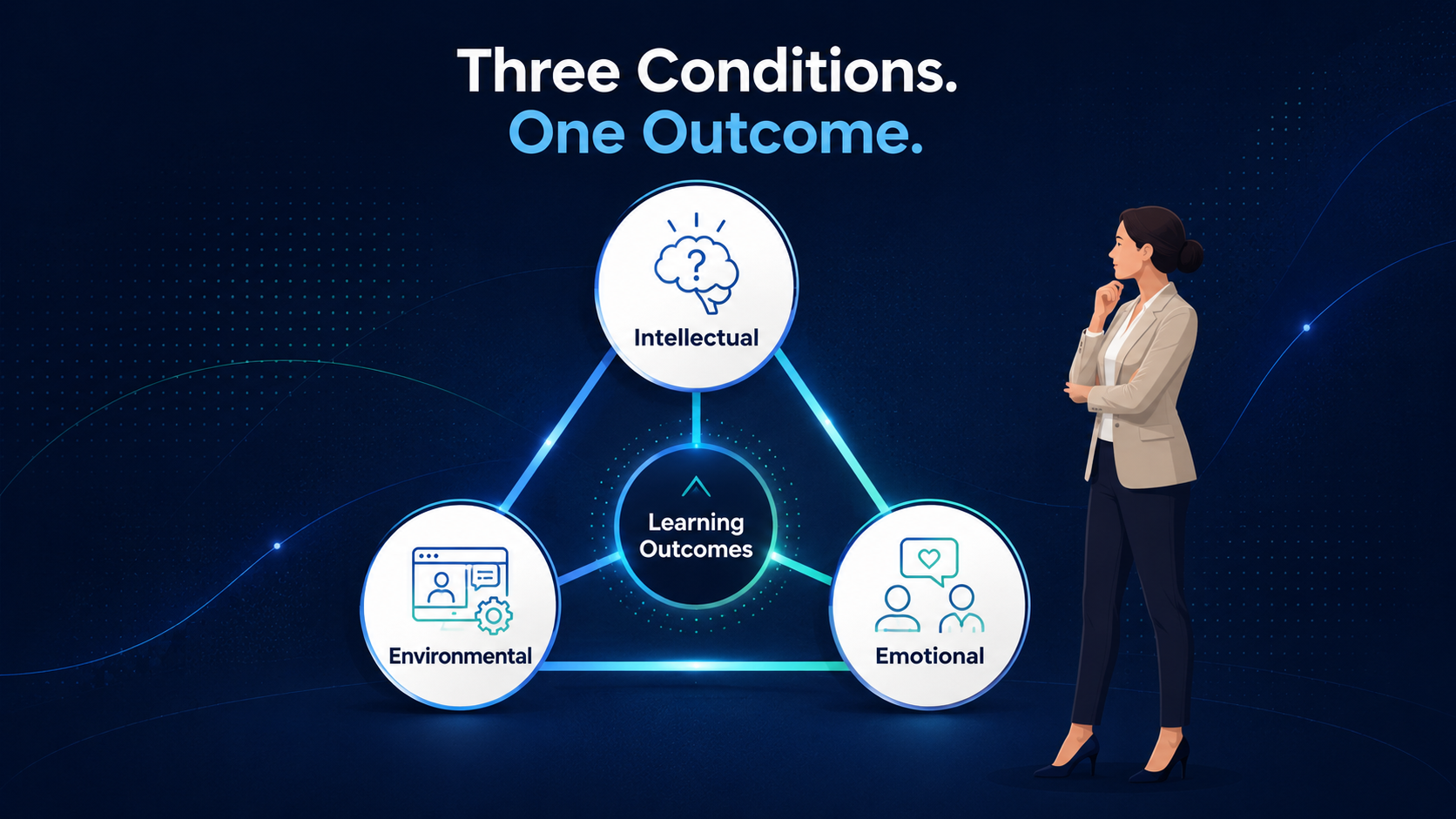
The first time this system converts activity into performance is explained by the InQuire Engagement Framework™, which shows how emotional, intellectual, and environmental engagement operate not as outcomes, but as the mechanisms that convert activity into performance.
Emotional engagement activates attention, but it cannot survive unsafe or chaotic environments. Intellectual engagement drives effort, but it cannot compensate for unclear intent. Environmental engagement protects focus, but it cannot rescue fragile delivery systems.
When the system holds, engagement produces observable behavior change. When it does not, engagement fades without transfer.
Variation in learning outcomes is not random. It follows system fractures.
When leaders cannot explain why results differ, learning loses credibility. When breakdowns can be traced to specific system conditions, learning becomes diagnosable and defensible.
The Live Learning Formula gives learning leaders a way to explain what is working, what is breaking, and why, all without relying on anecdotes or intuition alone.
Scaling learning without a stable system amplifies failure. Programs that rely on individual excellence or momentary engagement do not hold under pressure.
Leaders sense this risk early, which is why promising initiatives stall quietly instead of scaling boldly.
Sustainable learning impact requires more than activity. It requires a system designed to protect human connection, practice, and accountability at scale.
Run the Live Learning Impact Diagnostic to identify where design intent, delivery reliability, or the learning environment is undermining results and where targeted reinforcement restores trust.
For leaders who want an early signal before applying the full diagnostic, the Virtual Engagement Scorecard offers a practical way to spot gaps in engagement design and delivery that often undermine impact.
The same system signals leaders look for become visible to practitioners through structured analysis of engagement. Our Turn Live Engagement Into Proof You Can Use webinar teaches practitioners how to spot these signals and connect them to the system conditions that drive results.
If learning outcomes vary across cohorts, facilitators, or regions, the system is already signaling where trust is eroding. The question is whether those signals are visible.
Next week's post, Design for Learning Impact: Why Intent Must Hold, looks at the first place this system often fractures: design intent that isn’t built to hold once delivery begins.
 Read More
1 min read
Karen Vieth : Aug 17, 2026, 8:30:02 AM
1 min read
 Jennifer Lindsay-Finan : Aug 3, 2026, 8:30:02 AM