
 Jennifer Hofmann
1 min read
5 Delivery Gaps That Break Live Learning Quality at Scale
 Jennifer Lindsay-Finan : Apr 13, 2026, 8:30:00 AM

Live learning at scale is a deliberate choice. Organizations use virtual classrooms, hybrid learning, and face-to-face delivery when people must practice judgment, apply skills, or align around complex decisions. That choice carries an expectation that the experience will hold across facilitators, locations, and cohorts.
In our work supporting global rollouts, we have seen where hesitation begins. Not around content quality, but around delivery reliability. Leaders often trust the design. What they question is whether the system around that design can sustain growth without introducing variance.
Problems emerge when programs expand faster than the delivery conditions supporting them. Launch dates slip because facilitators or production support are unavailable. Cohorts report uneven experiences. Internal teams spend more time coordinating schedules and troubleshooting than improving outcomes. These patterns rarely indicate weak capability. They signal a delivery system absorbing strain it was not built to carry.
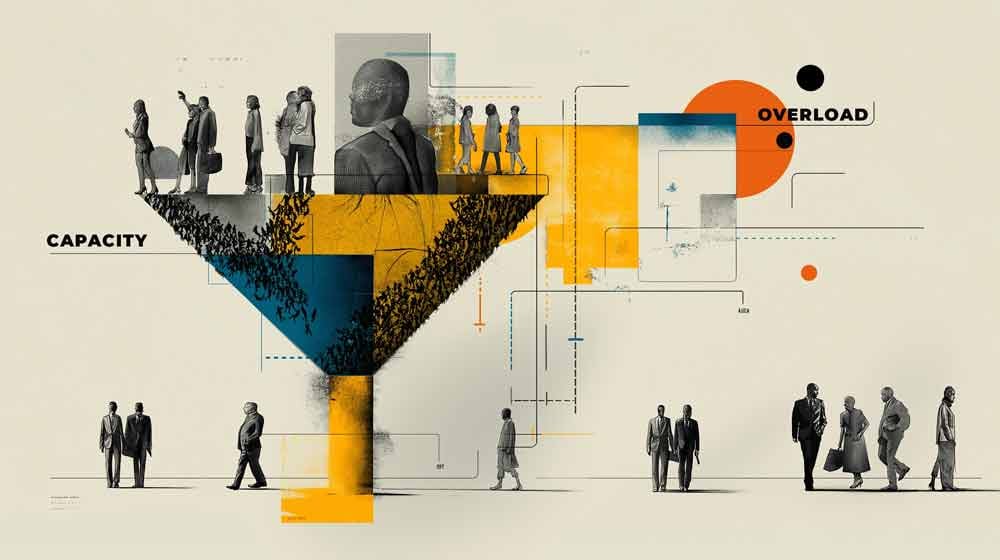
Most training departments are staffed with skilled professionals who can deliver excellent sessions under normal conditions. The constraint is finite capacity. As programs multiply across business units and regions, delivery work competes with preparation, coordination, and recovery. Managers absorb the strain by reshuffling schedules or stepping in personally when gaps appear.
Quality erosion rarely looks dramatic: It shows up as delayed launches, facilitators forced to improvise around logistics, or inconsistent learner experiences across cohorts. We have seen strong teams slowly shift from improving programs to simply keeping them running.
Over time, internal teams become less available for design refinement, evaluation, or strategic initiatives. The system moves from proactive management to reactive maintenance. Adding more sessions without changing delivery conditions redistributes workload rather than increasing reliability. The organization may appear to scale, but in reality, performance becomes fragile.

Operational strain carries commercial consequences, even when those consequences are not formally tracked. Time to launch slows because expertise must be scheduled around competing priorities. Rework increases when delivery conditions vary across regions. Leaders lose confidence when feedback differs widely from one cohort to another.
Learners respond to instability as well. When sessions feel rushed or uneven, engagement declines and application suffers. These effects accumulate quietly. Programs continue, but their impact becomes harder to demonstrate, which makes future investment more difficult to defend.
In large enterprises, we have seen this pattern surface most clearly during multi-region expansion. Delivery inconsistency introduces risk that is not budgetary, but reputational. Live learning is chosen because leaders believe the human advantage matters, but this belief weakens when results vary.
Expert facilitators, producers, instructional designers, and learning operations staff stabilize different aspects of delivery: Facilitators concentrate on learners and decision practice. Producers manage logistics and protect pacing in virtual classrooms and hybrid learning environments. Designers ensure activities translate consistently across modalities.
When these roles operate as a coordinated system, variance decreases, sessions start on time, transitions are smooth, disruptions are resolved without derailing learning, and facilitators focus on participants rather than recovery work, preserving instructional quality across cohorts.
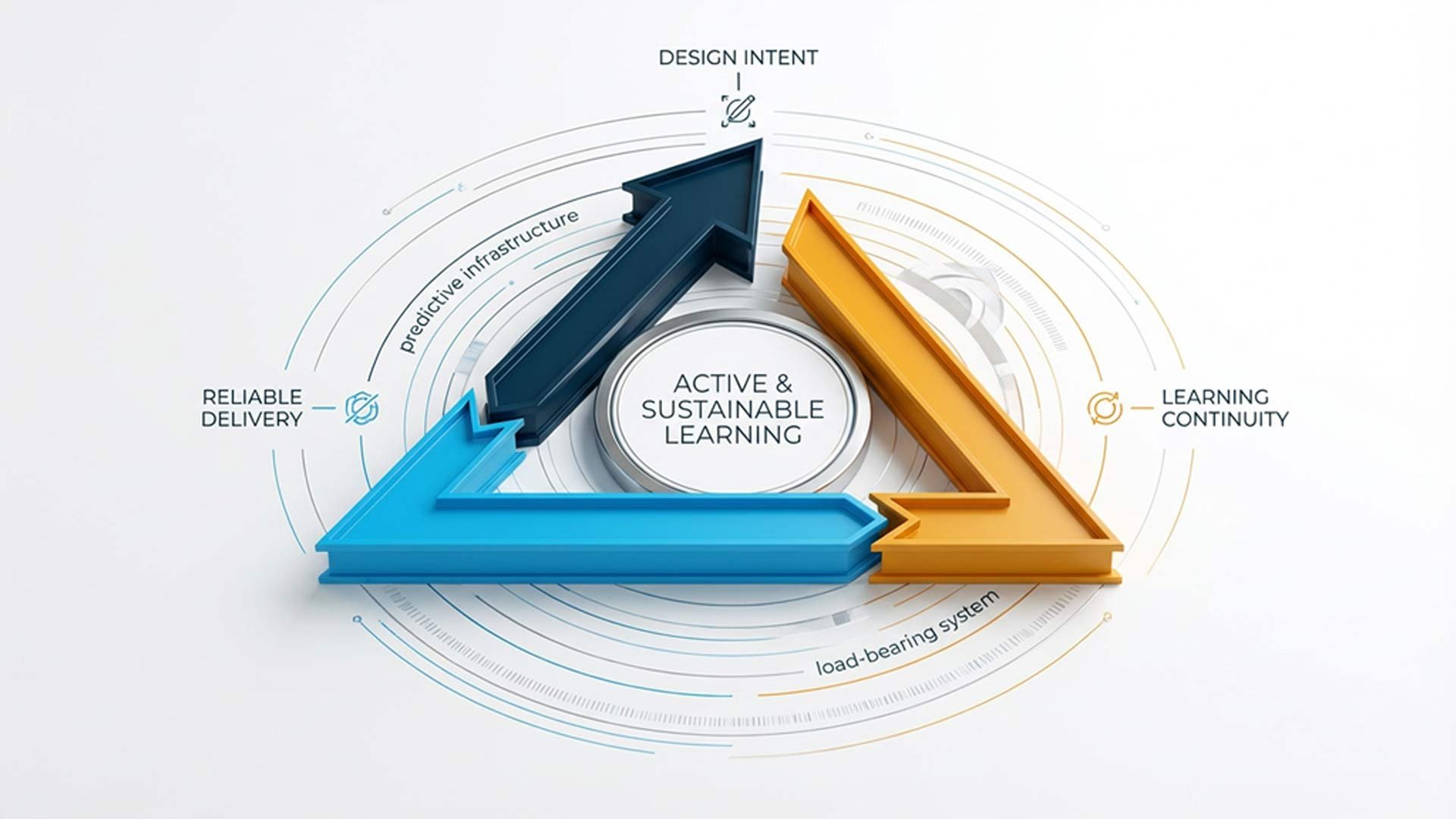
This is where the Live Learning Formula™ becomes practical. Live is premium only when the delivery infrastructure supports consistency.
The formula describes three conditions that must operate together at scale:
Expertise embedded into the system reduces reliance on individual heroics and increases predictable performance.
Large multi-region programs illustrate this effect clearly. Where expert teams are in place, metrics remain stable across locations, internal intervention declines, and learner experience is comparable regardless of facilitator or modality. Expertise functions as infrastructure rather than augmentation.
Demand for live learning rarely grows in a steady line. Surges occur during product launches, reorganizations, or compliance deadlines. Without elastic capacity, organizations respond by overloading internal staff or compressing preparation time, both of which increase failure risk.
Expert delivery teams provide a buffer that allows programs to expand or contract without shortcuts. Internal facilitators can focus on high-value sessions while additional capacity absorbs volume. Production support maintains consistent standards even under tight timelines.
This elasticity protects both people and outcomes. Burnout decreases, institutional knowledge is preserved, and teams retain the bandwidth to refine programs instead of simply sustaining them.
Reliable delivery changes how learning functions inside the organization. Training managers experience less operational noise and can concentrate on improvement rather than crisis response. Leaders receive clearer signals about program effectiveness because results are not distorted by inconsistent conditions.
Learners benefit from predictable structure and smooth execution, which increases confidence and supports application. Over time, consistency becomes part of the learning brand. Programs can scale further because stakeholders trust the experience to hold across environments.
The human edge is not individual charisma, it's a delivery system that produces consistent performance under real conditions.
If delivery quality begins to vary as programs expand, participant feedback alone will not explain why. Watch for operational signals such as delayed launches, facilitator overload, uneven results across regions, or outcomes that depend heavily on who delivers the session. These indicators suggest that the delivery system may not hold at scale.
1 min read
Jennifer Lindsay-Finan : Apr 13, 2026, 8:30:00 AM

1 min read
 Karen Vieth : Apr 20, 2026, 8:30:00 AM
1 min read
Jennifer Lindsay-Finan : Aug 3, 2026, 8:30:02 AM