
 Jennifer Hofmann
1 min read
Why Consistency Determines Live Learning Confidence
 Karen Vieth : Apr 20, 2026, 8:30:00 AM
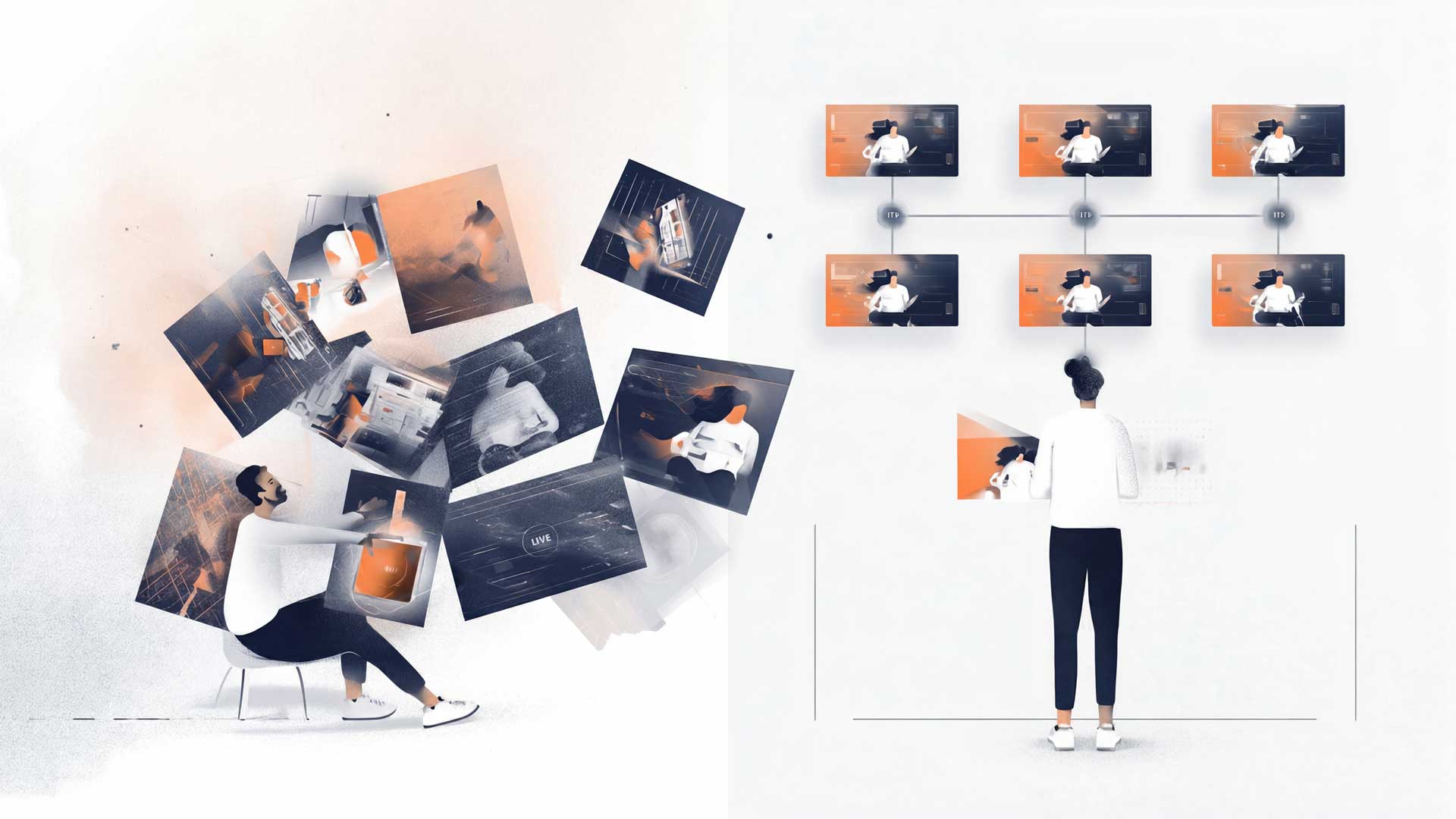
Most live learning programs don’t break because of poor facilitation, they break because what worked once can’t be repeated consistently. A virtual classroom runs smoothly with one facilitator, then starts to feel uneven as more people are brought in to deliver. A hybrid learning session feels balanced in one region, then loses its remote audience in another. The content and intent remain the same, however the experience shifts depending on who is leading and how the session is supported.
In our work with organizations scaling live learning, this is one of the first inflection points we see. Early success creates confidence, but as delivery expands, variability increases. Without a shared system, quality becomes dependent on individual execution rather than something the organization can reliably produce.
Live learning becomes unpredictable when it relies on individual judgment instead of shared standards.
In a virtual classroom, this shows up when facilitators make different decisions about pacing and interaction. While one builds in time for dialogue and application, the other focuses on covering content efficiently. Both are capable, yet only one creates the intended experience.
Across large rollouts, the same pattern appears in production: A session that runs smoothly with one producer starts to drift with another, transitions feel slower, timing becomes inconsistent, and facilitators begin compensating in real time. This often occurs because they are fighting for attention in an environment where work-related multitasking occurs during virtual meetings. This increases cognitive load and introduces more variation as facilitators struggle to keep a distracted audience on track.
These are not isolated issues. They are signals that the delivery infrastructure has not been fully defined. Managed learning services can stabilize this in the short term. Recent data shows that 41% of L&D teams cannot take on additional work without external support, making these partnerships a critical safety valve for growth. Experienced facilitators and producers bring consistency because they operate from a shared system. The risk emerges when internal teams are not working from that same system. Quality begins to vary based on who is delivering rather than how delivery is designed to operate.
Managed learning services are effective because they are built on clear, repeatable standards.
Facilitators know how to manage interaction and timing, producers anticipate transitions and support flow, and designers create experiences that align with how sessions are actually delivered. This allows the system to become integrated, and the results are predictable. The challenge is that internal teams often don’t have access to that system in a way they can apply consistently.
In our work with a healthcare organization scaling clinical training across regions, this gap became clear. When our managed learning services team delivered sessions, the experience held steady. Learners engaged in discussion, applied concepts, and moved through the session with a consistent rhythm.
When internal teams delivered the same program, the experience varied. Some sessions ran long and compressed key application moments, while others moved quickly and lost depth in discussion. Not surprisingly, participant feedback reflected that inconsistency. We found that the issue was not individual capability, and instead was the absence of shared standards.
To address this, we introduced the same delivery standards our service teams use every day. Facilitators, producers, and designers aligned on how live learning should operate in practice, not just what content needed to be covered.
We then reinforced those standards through our certificate pathways. In addition to certification, we try to ensure that internal teams could apply the same system consistently, regardless of who was delivering.
Once that alignment was in place, the difference was visible: sessions maintained a steady pace, transitions felt intentional, and learner engagement became more consistent across regions. The system, not individual effort, was driving quality. This shift is a hallmark of high-maturity organizations. Research shows that those with established, systemic learning cultures achieve 37% greater employee productivity compared to those relying on ad-hoc methods.

When live learning is supported by shared standards, consistency becomes something you can see.
Across large programs, a stable system shows up in how sessions operate day to day:
These are not outcomes of better content or stronger individual performance. They reflect alignment across facilitation, production, and design.
This is the shift from heroics to systems. When delivery depends on individual expertise, scaling introduces risk and when delivery is anchored in shared standards, scaling becomes more predictable.
Look at where your live learning programs begin to drift as they scale. Not in early sessions, but as more facilitators and producers become involved. Where does quality start to depend on who is delivering rather than how the system is designed to operate? Those moments are the same inflection points we saw in the healthcare program before standards were introduced.
Now consider how your internal teams are being equipped to operate. Are they working from a shared framework, or relying on individual experience to fill the gaps? Tools like our Good to Great Checklists can help make those expectations visible, especially when used to guide preparation and reflection across sessions.

If you want to see how this works in practice, our upcoming webinar, “From Good to Great: The Practitioner Skills Behind Consistent Live Learning” walks through how teams apply these standards in real time and use the checklists to guide delivery decisions. It offers a clear way to evaluate your current approach and identify where consistency can be strengthened.
From there, our certificate pathways help reinforce those standards so they hold across your programs, not just in isolated moments of strong delivery.
1 min read
Karen Vieth : Apr 20, 2026, 8:30:00 AM
1 min read
 Jennifer Hofmann : Aug 3, 2026, 7:00:01 AM
1 min read
Karen Vieth : May 4, 2026, 8:30:00 AM