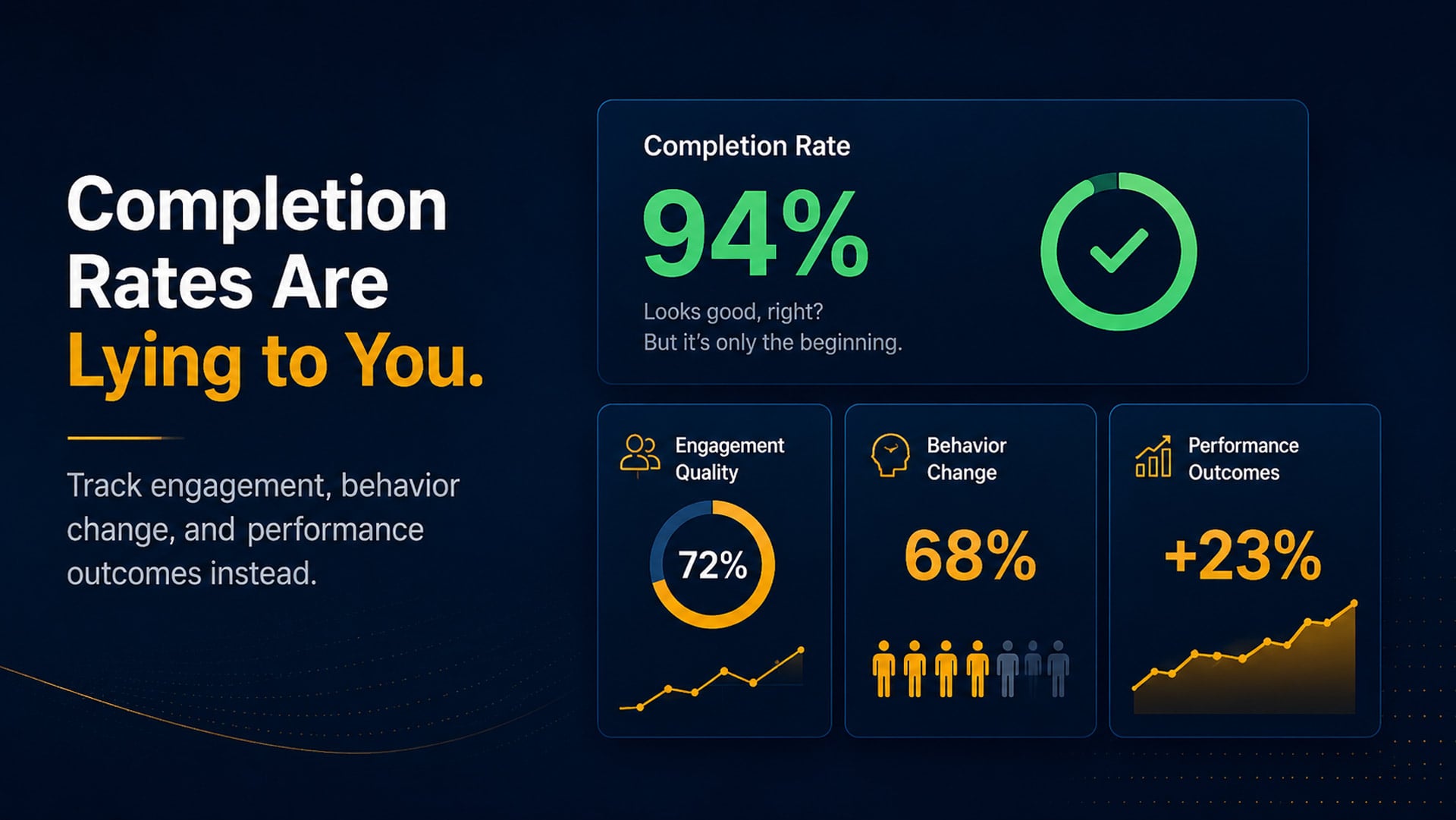
A learning report lands on the executive dashboard showing a 94% completion rate, strong attendance, and decent satisfaction scores. On paper, the program looks healthy. Then the business leader asks the question that changes the room: “So...what improved?”
This is where many L&D teams get stuck. Completion rates tell you who showed up, logged in, clicked through, or stayed until the end, but they do not tell you whether live learning built capability, changed behavior, or helped people perform differently on the job.
For leaders under pressure to defend budget and prove value, that gap is more than frustrating. It creates credibility risk. Recent research reveals that companies actively tracking training ROI are 52% more likely to see their learning budgets increase.
In our work with global programs, one of the first patterns we see is that the data most teams can easily access is rarely the data that proves learning mattered. The LMS captures activity because activity is simple to record. But when a sales team still struggles with discovery calls, a manager cohort still avoids feedback conversations, or a compliance rollout still produces the same errors, completion data starts to look less like evidence and more like cover. Cognitive research in corporate environments shows that without ongoing reinforcement and behavior tracking, employees forget up to 70% of new training information within just 24 hours of completion.
Completion Rates Measure Activity, Not Learning Outcomes
Completion rates are not useless, as they can confirm access, participation, and compliance. In a regulated environment, knowing who completed required training matters. The problem starts when that number is treated as proof of impact.
This typically shows up when every cohort appears “successful” in the dashboard, but facilitators hear the same confusion in breakout rooms, managers report the same performance gaps, and learners leave without enough practice to apply the skill. The report says the program happened, but the workplace says the capability did not hold.
That is why completion-based measurement can quietly mislead leadership. It gives the appearance of control without showing whether the learning strategy is producing reliable outcomes. A leader may see green indicators across a dashboard and still have no clear answer when the CFO asks what changed after the investment.
Better measurement starts by separating participation from performance evidence. Did learners attend? That is one question. Did they engage in meaningful practice, demonstrate progress, and apply the behavior later? That is a different and more useful conversation.
What Better Live Learning Measurement Looks Like
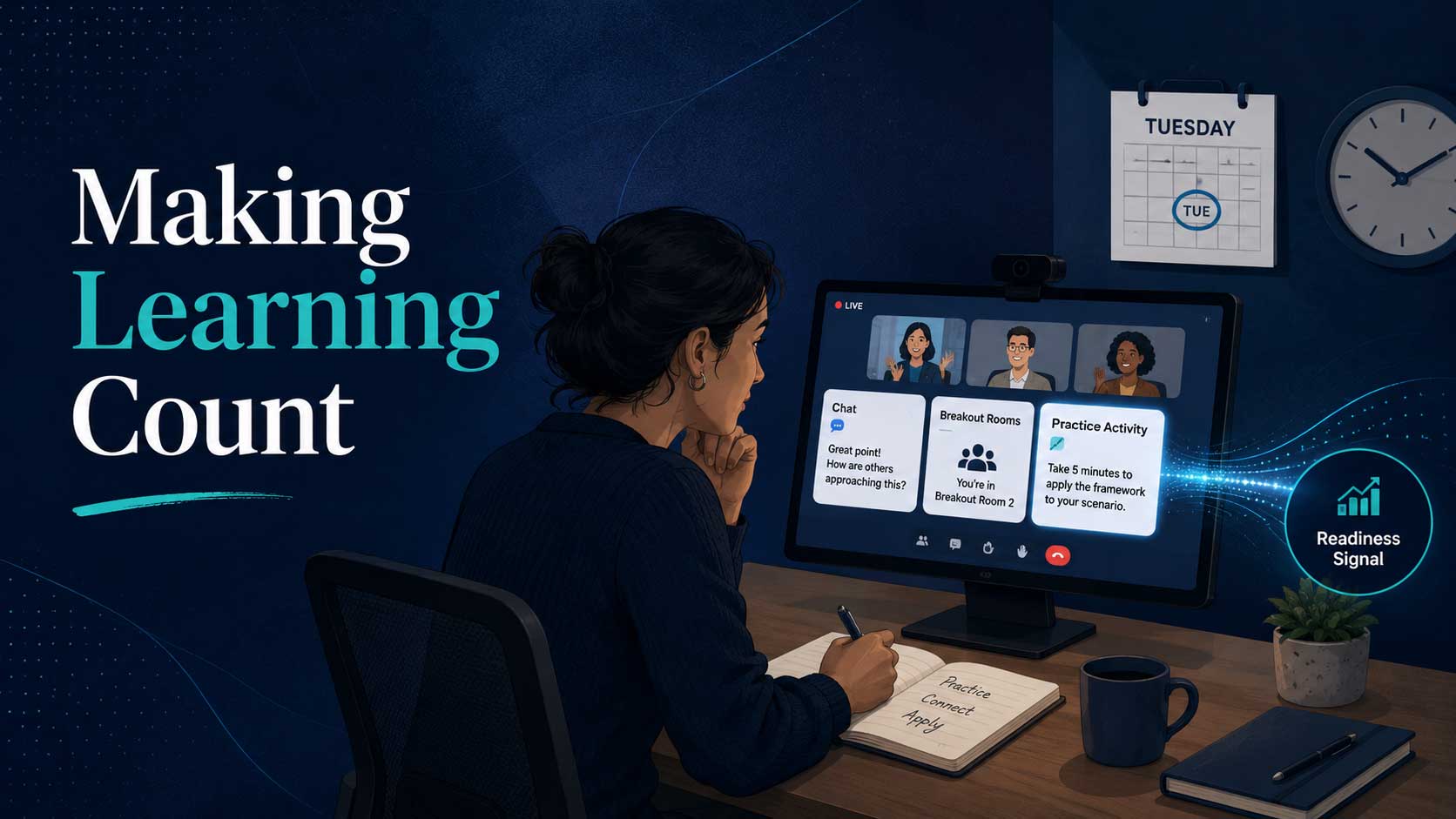
Live learning is not premium because people happen to be together at the same time. It earns that investment when the design, facilitation, production, and follow-through create conditions for practice, feedback, dialogue, and application. Those conditions are measurable, but not if the only numbers being tracked are attendance and completion.
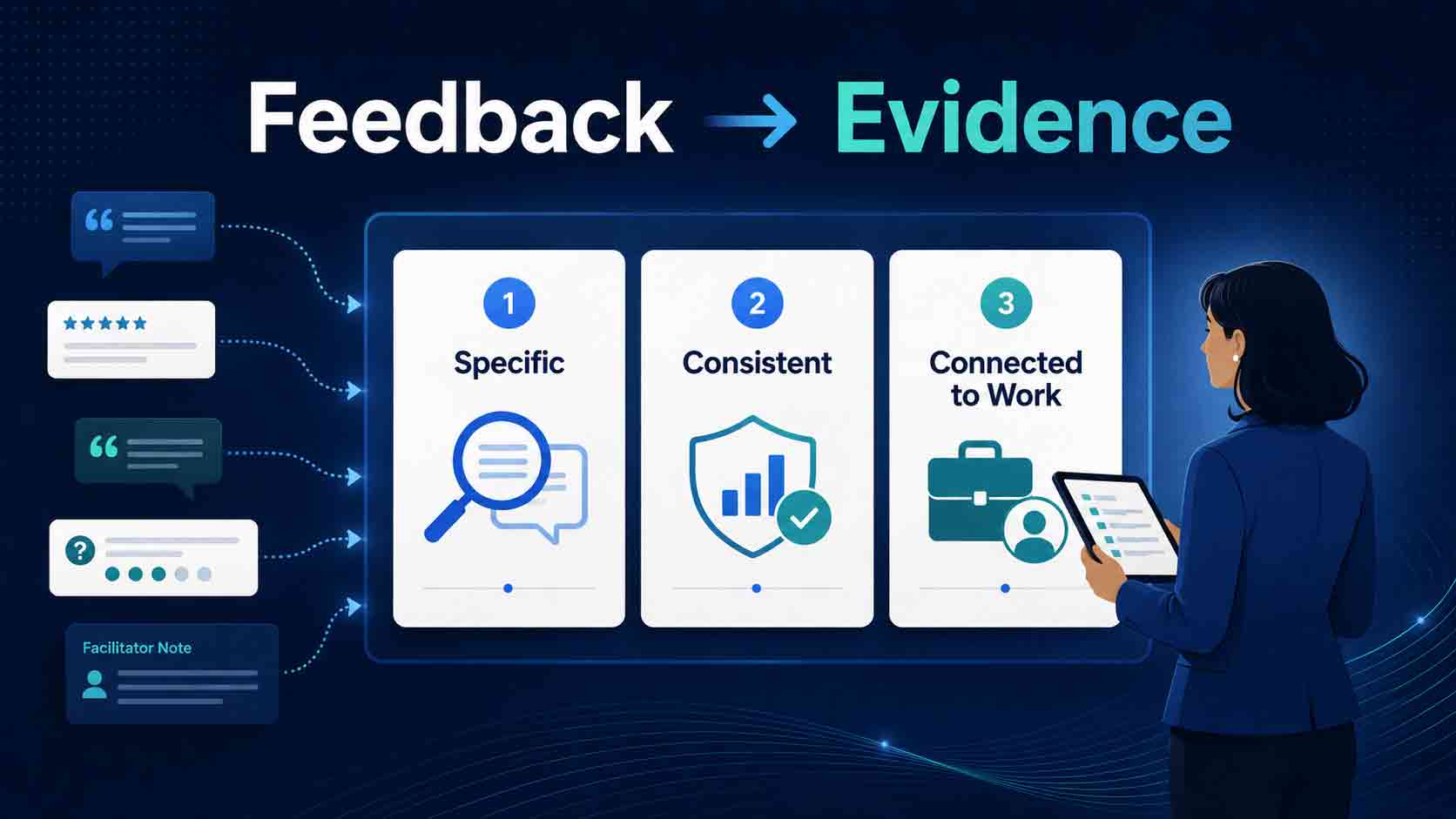
Leaders should be looking for three kinds of evidence:
Across large rollouts, the strongest signal is often a pattern and not a single dramatic number. One cohort asks sharper questions during scenario practice. A facilitator notices fewer learners struggling with the same concept in week three. Managers report that new behaviors are showing up in team meetings without being prompted. Those are the kinds of signals that help leaders move from “people completed the training” to “the program is changing how work gets done.”
The Measurement Gap Is a Framework Problem
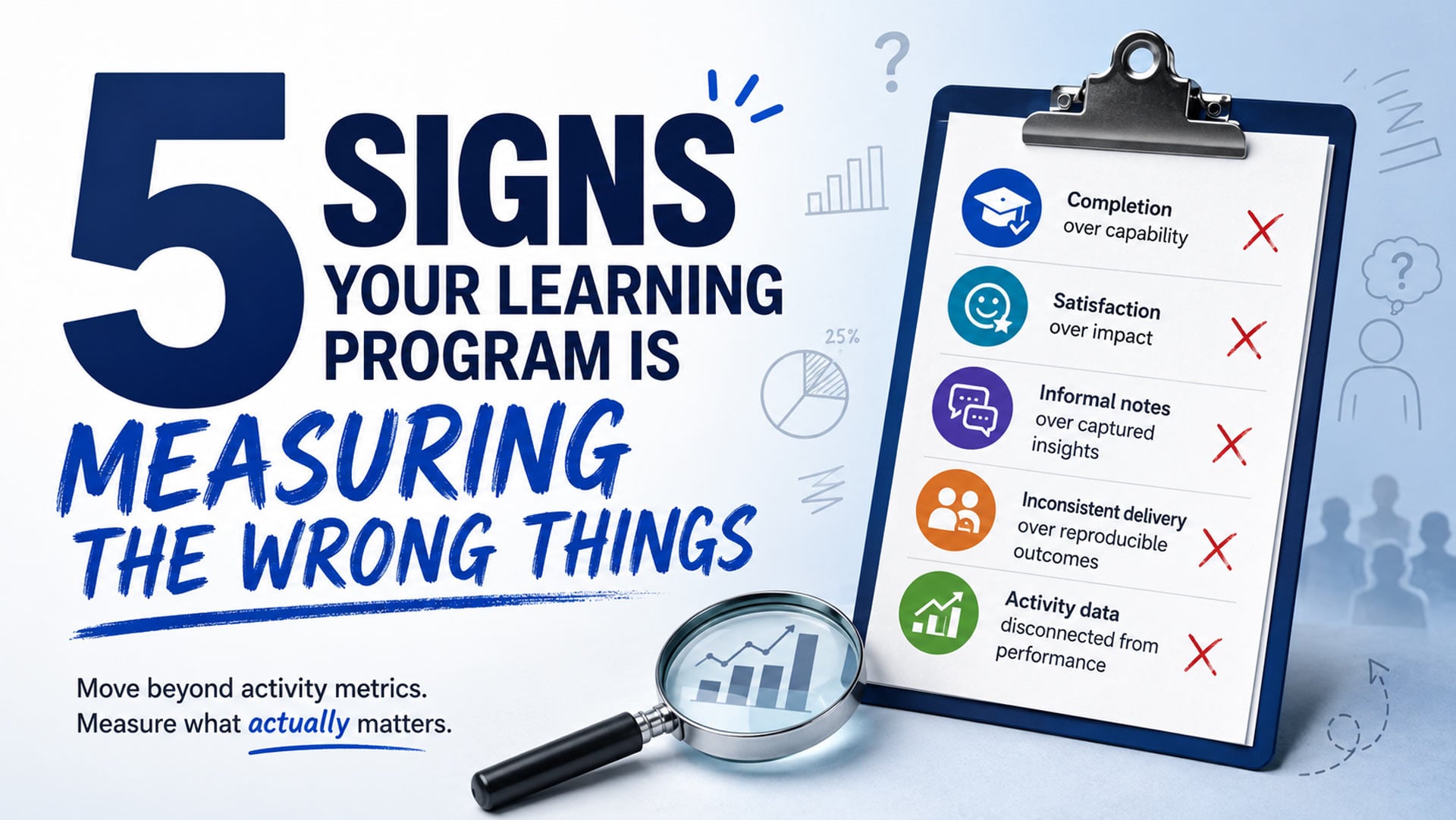
Many teams lack a measurement framework that connects design intent to delivery evidence and business outcomes. Without that structure, measurement becomes whatever the platform can export: attendance, completions, satisfaction, maybe quiz scores.
In complex virtual learning environments, this gap becomes visible fast. A program may be designed to build coaching capability, but the post-session survey asks whether the facilitator was engaging. The session may include practice, but no one captures whether learners improved between the first attempt and the final scenario. Managers may see behavior change later, but there is no planned handoff to collect that evidence, and this can become a system issue.
The Live Learning Formula™ helps make this clearer because it treats outcomes as the result of an integrated system: design and development, delivery and facilitation, and support and learning continuity. When those pieces are connected, leaders can see more than whether the event ran. They can see whether the learning experience created the conditions for measurable capability building.
What Leaders Should Examine Now
Leaders should start by looking at the next program report and asking what story it can actually defend. If the report shows completion, satisfaction, and attendance but cannot point to engagement quality, behavior change, or performance outcomes, the organization is likely measuring what was easy rather than what mattered.
For a deeper look at how live learning can produce evidence leaders can share upward, download our Why Go Live White Paper. It explores how engagement, practice, facilitation, and learning continuity contribute to measurable outcomes that extend beyond attendance and completion metrics.
If your organization is working to strengthen the connection between learning investments and business results, the white paper offers practical guidance for identifying meaningful indicators of behavior change, engagement quality, and performance improvement.

 Karen Vieth
 Jennifer Hofmann : Aug 24, 2026, 8:00:03 AM
 Jennifer Lindsay-Finan : Jul 6, 2026, 8:00:03 AM
 Karen Vieth : Aug 10, 2026, 8:30:01 AM