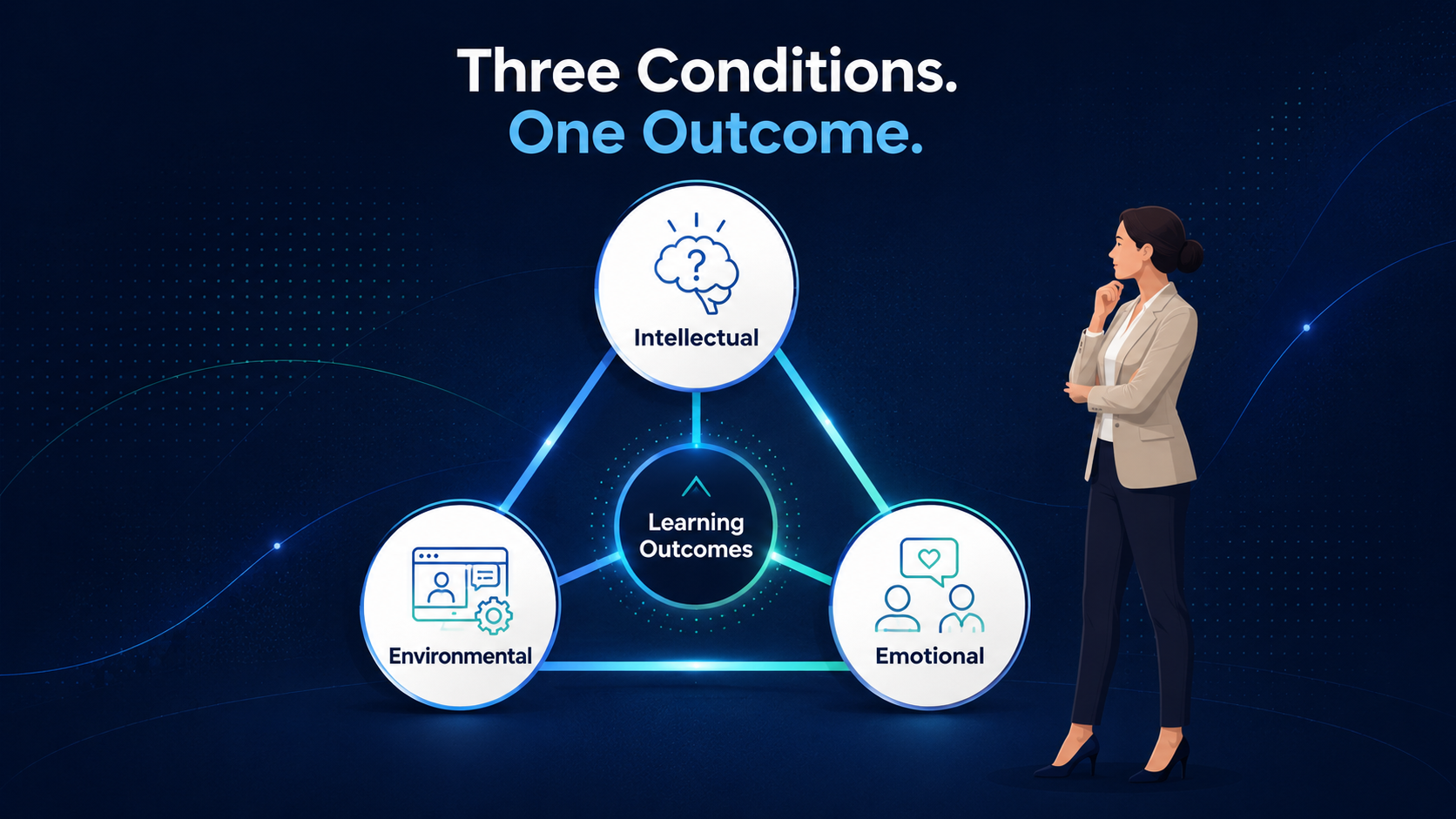
Picture this: The session ended on time. The facilitator got through the deck. Attendance was high, the chat stayed active, and the completion report looks good....But by the next morning, managers are still getting asked basic questions, learners are unsure how to use what they practiced, and the learning team is already hearing, “Can we clarify that in the next cohort?”
This is where learning measurement often breaks down. A live learning program can look successful in the LMS while still failing to produce visible behavior change. Frustration then becomes familiar for facilitators, designers, producers, and learning analysts when they are asked to prove impact, but the data available mostly proves activity.
The problem is not that L&D teams do not care about outcomes. In our work across live and virtual classroom programs, one of the first patterns we see is that teams are often measuring what is easiest to capture, not what is most useful to improve.
The Measurement Gap Shows Up Before the Report Does
Most measurement issues are visible long before anyone builds a dashboard. They show up when the facilitator notices learners are quiet during the application activity, but the post-session survey still comes back positive. They show up when the producer sees the same confusion in chat across three cohorts, but there is no standard place to document the pattern. They show up when an instructional designer updates the same activity after every delivery because the design intent is not carrying cleanly into the session.
That is the measurement gap in practical terms. Completion rates tell you what happened. Outcomes tell you whether it mattered.
98% of L&D teams want to prove impact, but only 62% have the capability to measure it, and only 24% actually have the budget. That gap is not just a reporting issue because it affects how programs are designed, delivered, improved, and defended.
For practitioners, this gap can feel personal. You may know a session worked because learners asked better questions by the end, practiced the right decision points, or connected the content to a real customer scenario. But unless those signals are captured, the official story may still be limited to attendance, satisfaction, and completion.
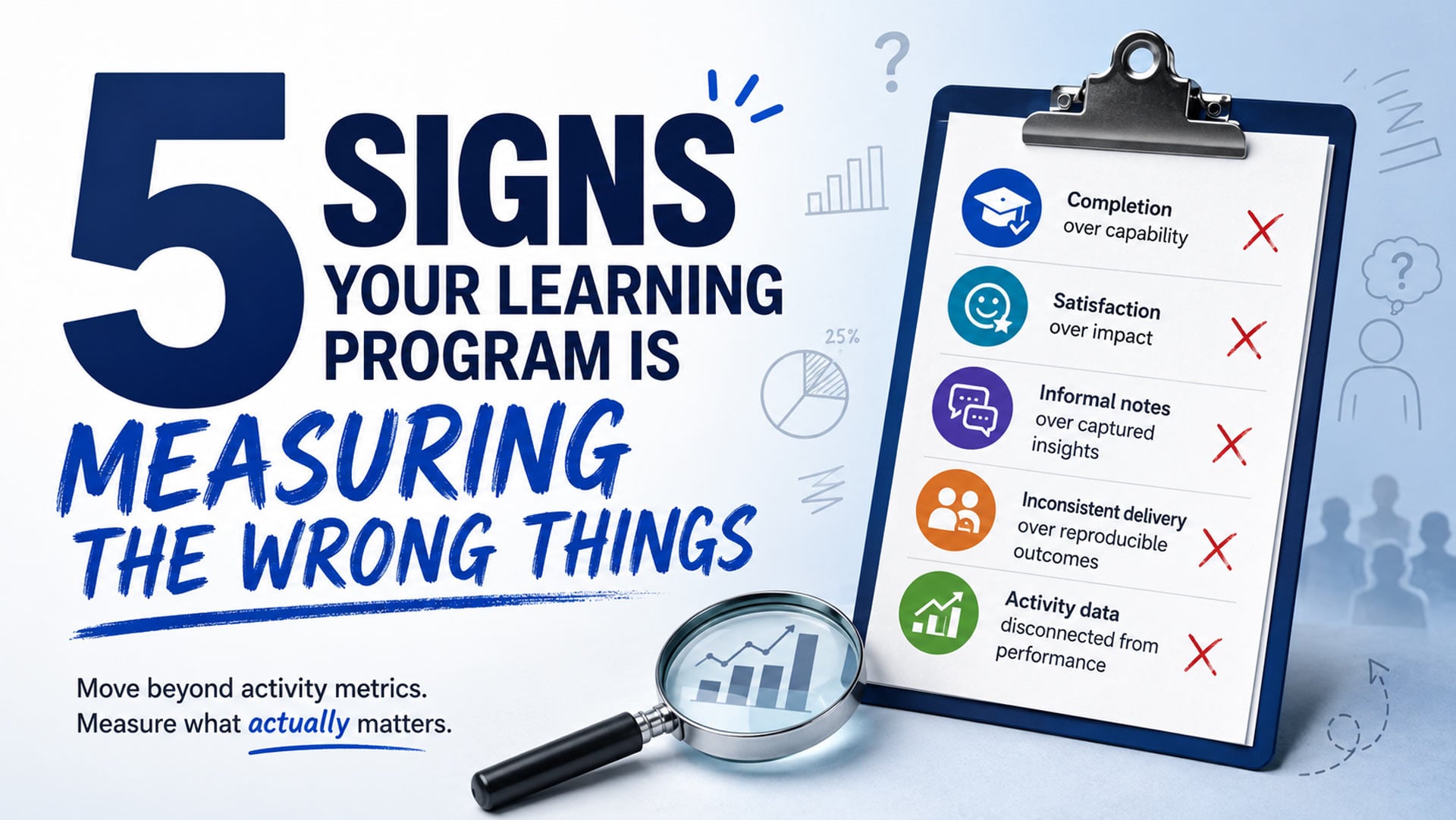
5 Signs Your Learning Program Is Measuring the Wrong Things
Here are five signs the measurement framework may be missing the real story:
The common thread is that these programs are being measured as events instead of systems. Live learning is not just a delivery format, it is a human-centered capability-building environment where design, facilitation, production, practice, and continuity all shape whether outcomes become visible.
What Better Learning Measurement Looks Like in Practice
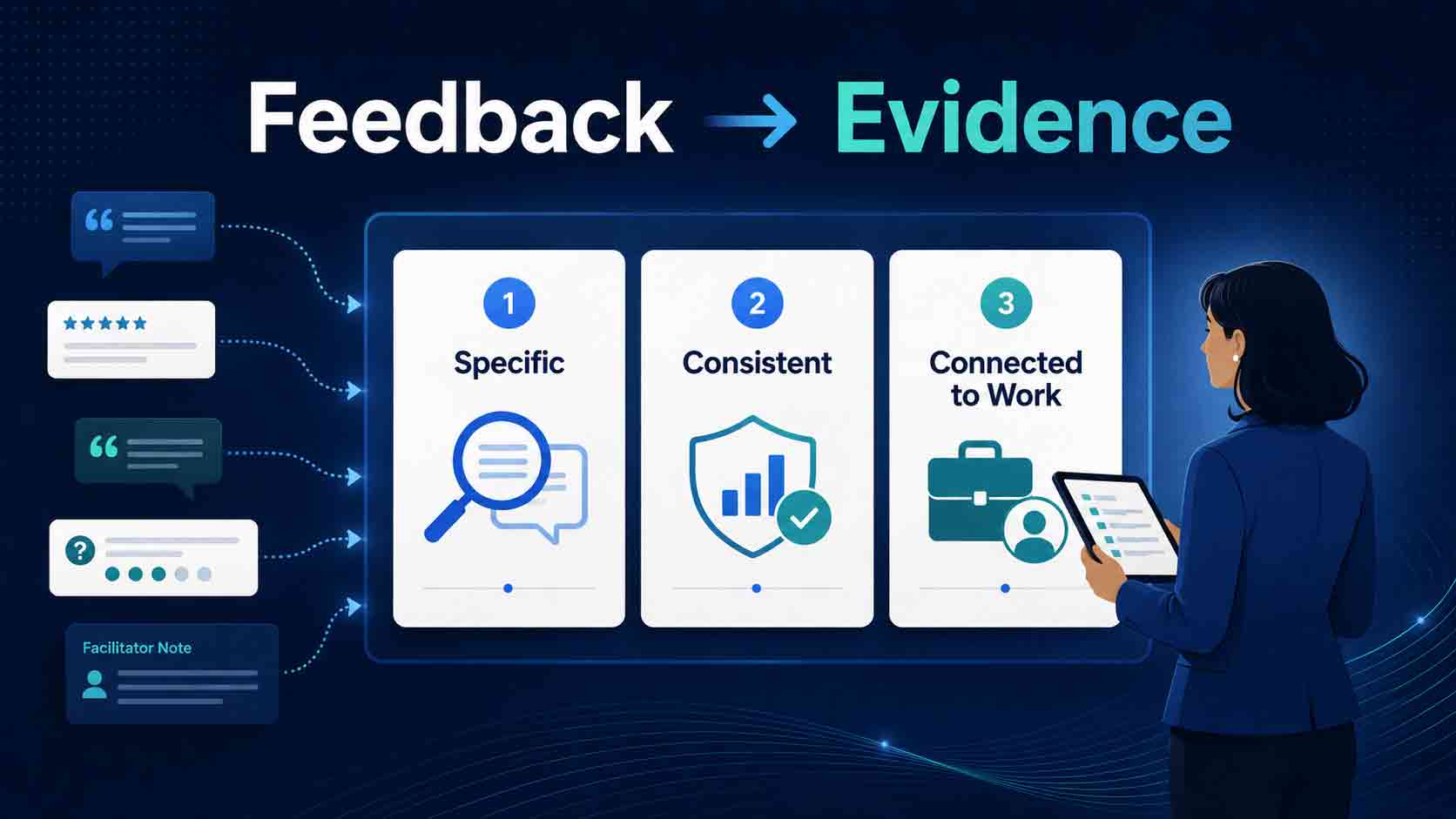
Better measurement does not always mean more complex measurement. It often starts with building small, useful evidence points into the flow of the program to catch these performance drops before a rollout concludes. During a session, that might mean capturing where learners hesitate, which activity produces the clearest practice evidence, or which questions repeat across cohorts.
In programs where facilitation, design, and production are separated, shared evidence becomes especially important. Facilitators may see that learners understand the concept but cannot apply it. Producers may notice that instructions are causing avoidable friction. Designers may realize that the activity is testing recall when it should be testing judgment. Each person has part of the outcome story, but the program only improves when those signals come together.
This is where InSync’s Live Learning Formula matters! Design and development, delivery and facilitation, and support and learning continuity all influence what can be measured. If practice is weak, behavior change will be hard to see. If delivery notes never reach the design team, the next session repeats the same problem. If reinforcement is missing, learners may understand the session but fail to use the skill at work.
Putting This Into Practice
Start with one program and ask a practical question: “What evidence would show us this worked?” Then look at the current report. If the report only shows attendance, completion, and satisfaction, it is probably not telling the full story.
The Why Go Live White Paper is a useful next step if your team is trying to move from activity reporting to evidence of engagement quality, behavior change, and performance outcomes. It explores how live learning creates opportunities to observe participation, capture practice data, and identify the signals that matter most when measuring impact.
If your team is rethinking how learning success is defined, the white paper provides a practical framework for connecting learning experiences to meaningful performance outcomes.

 Jennifer Lindsay-Finan
 Karen Vieth : Aug 10, 2026, 8:30:01 AM

 Jennifer Hofmann : Sep 14, 2026, 8:15:00 AM