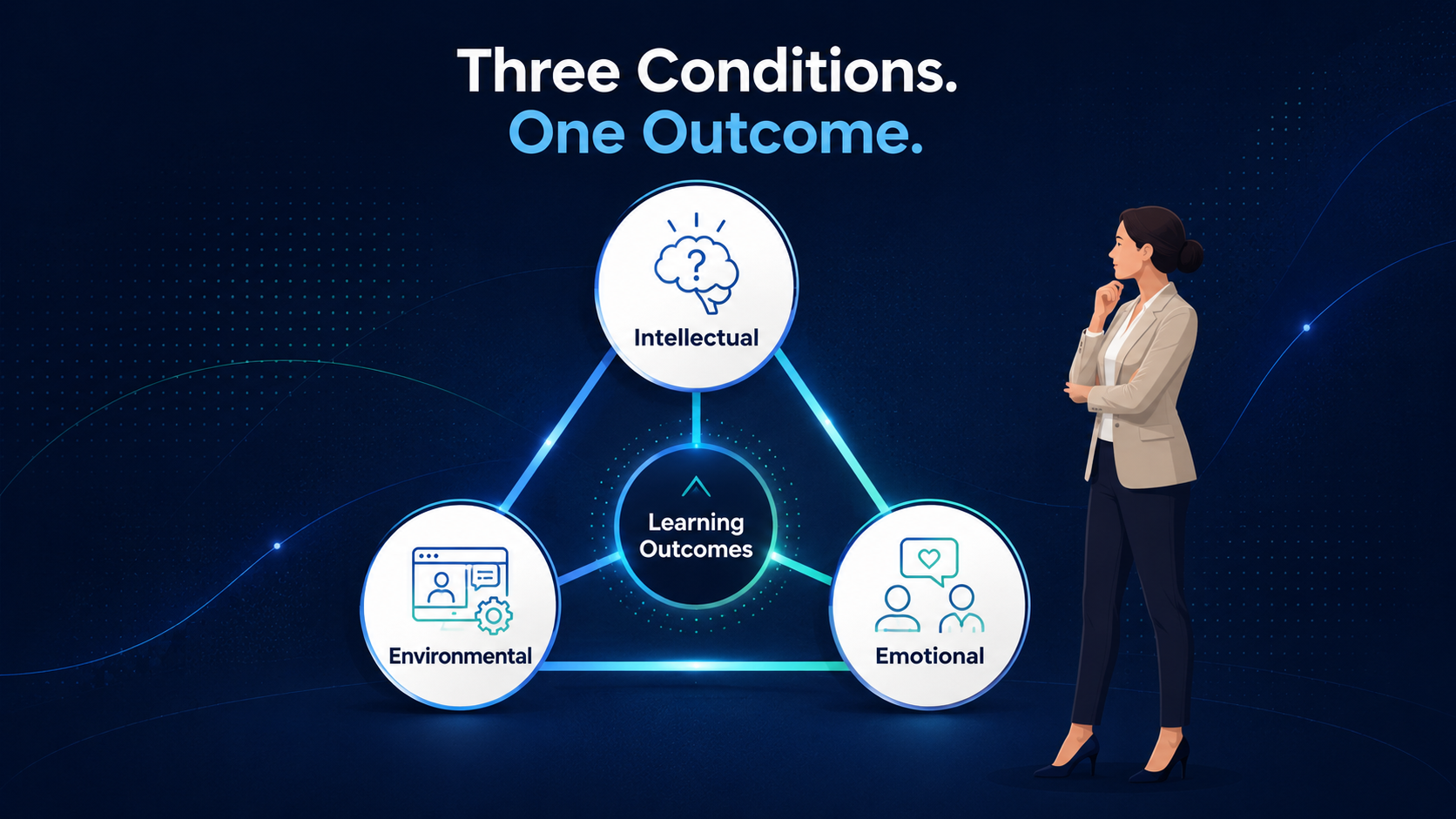
The virtual classroom can go quiet fast. Participants log off, the producer closes the room, chat is saved somewhere, and the facilitator is already thinking about the next session on the calendar. Maybe the timing was tight. Maybe the breakout activity worked better than expected. Maybe one group struggled with the same scenario twice, and nobody has a place to capture what that means.
When this happens, a lot of live learning proof gets lost because our operational frameworks lean heavily on vanity compliance metrics. Although LinkedIn Learning reports that aligning training to business strategy remains the number-one goal for L&D leaders, the metrics used to track success are still dominated by completion and basic satisfaction rates. It gets lost because virtual facilitation often moves from delivery to delivery without a practical habit for noticing whether the session actually changed anything.
The Question That Turns a Session Into Evidence
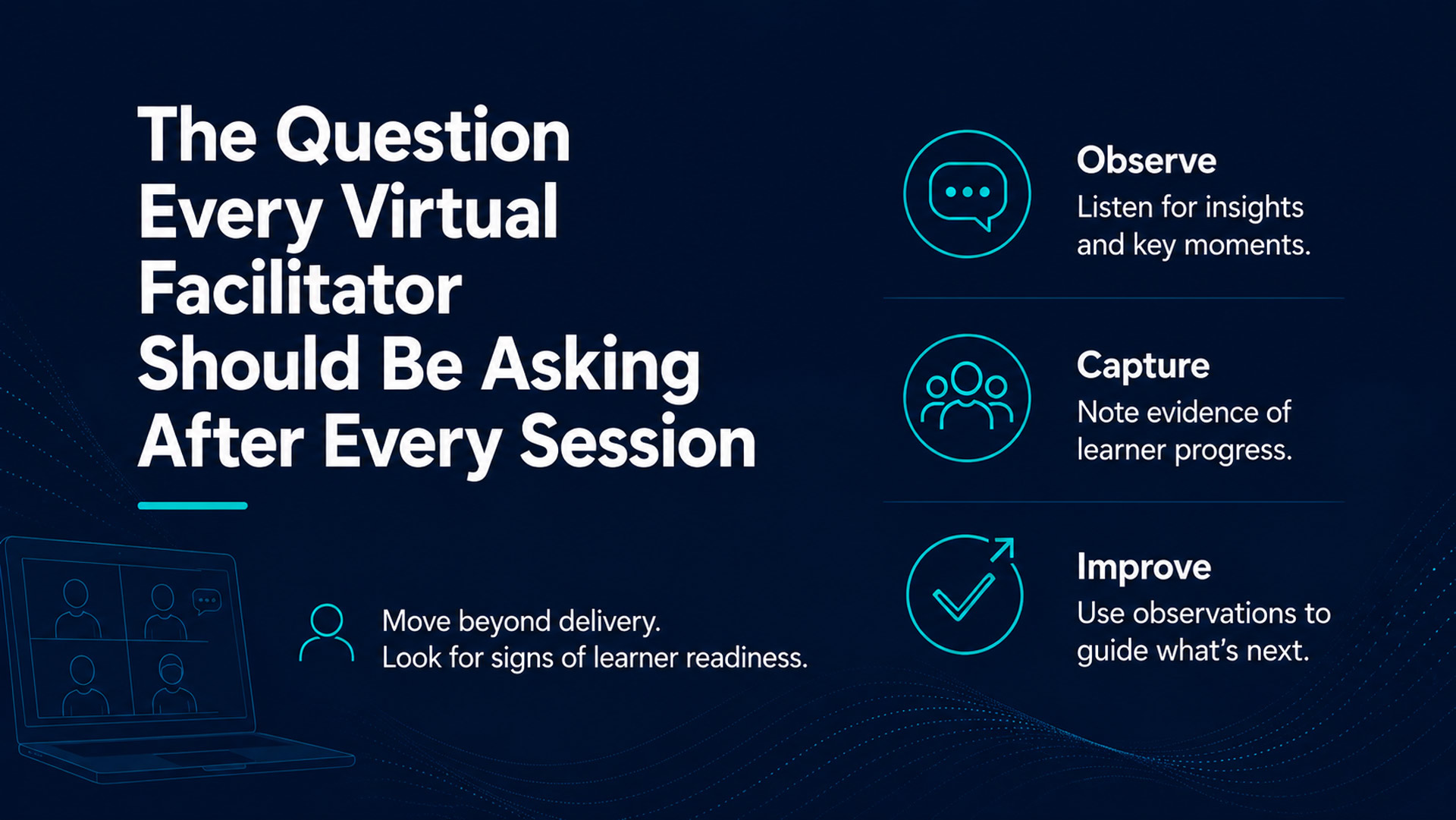
After every session, facilitators should ask one question:
That question is simple, but it changes the post-session conversation. It moves the focus away from “Did we get through the content?” and more towards “Did learners show signs of capability?” Those signs may appear when a participant uses the right language in a role play, when a breakout group catches its own mistake, or when chat shifts from basic clarification to application questions.
In our work with live learning programs, one of the first patterns we see is that facilitators often have valuable evidence in their heads that never makes it back into the learning system. They noticed where learners hesitated. They heard which examples created recognition. They saw when the energy dropped after a confusing instruction. Without a shared reflection habit, those observations disappear into the space between sessions.
What Facilitators Should Notice in Live Learning
Live learning is not content delivery with faces on screen. It is practice, feedback, dialogue, and adjustment happening in real time. That means the facilitator and producer are sitting close to evidence that a dashboard may never show.
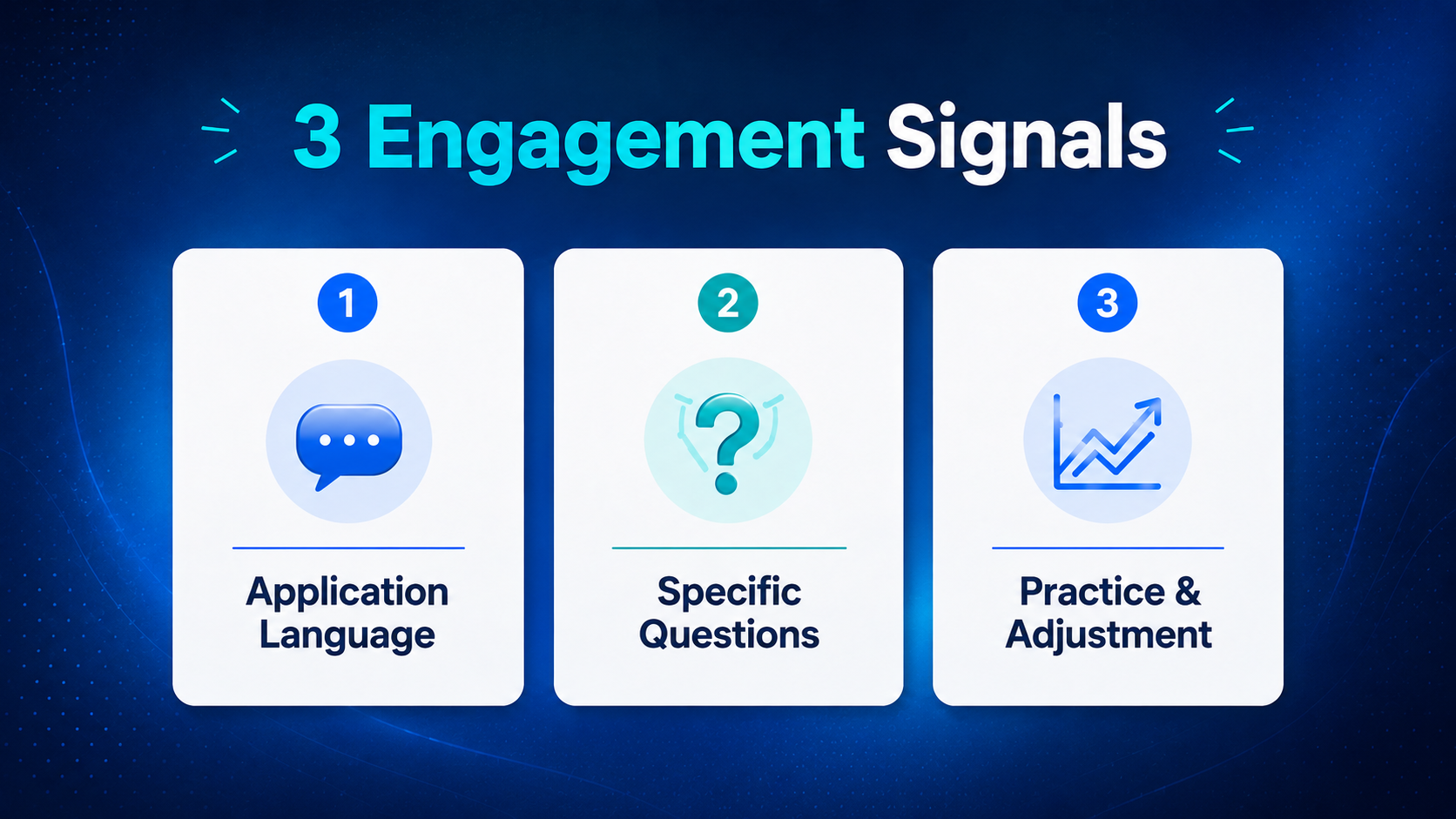
This evidence usually shows up in observable ways:
In complex virtual learning environments, these signals matter because they help separate attendance from engagement quality. A full room does not mean learning happened. A completed activity does not mean behavior will change. But when learners start making better choices inside the session, we have something worth capturing.
Why Post-Session Reflection Belongs in the Delivery Workflow
The problem is that many post-session routines are built around administration: save the attendance report, export the chat, send the follow-up email, and flag the technical issue. Those steps matter, but they do not answer the bigger question of whether the session moved learners toward performance.
When teams are delivering across regions, this becomes even more important. One facilitator may see strong learner readiness in a sales scenario while another sees confusion around the same activity in a different cohort. If those observations are not captured consistently, the program team may assume the design is working evenly when the experience is actually varying by audience, timing, or facilitation conditions.
This is where the InQuire Engagement Framework™ becomes useful as a practical lens rather than a form to complete.
Across large rollouts, the strongest delivery teams do not rely on facilitator heroics, and instead recognize the steep operational hurdles facing modern departments Research from Training Magazine reveals that 29% of corporate organizations struggle with learner engagement, while 41% cite a stark lack of resources and personnel to optimize training delivery.
High-performing teams combat both constraints simultaneously by building small, repeatable practices that make insight visible. A five-minute facilitator-producer debrief can uncover that the instructions were unclear, the scenario was too easy, or the learners needed more time to connect the concept to their role. That is not extra work; it is an efficient, high-yield method for protecting learning quality under tight resource constraints.
Putting This Into Practice
At the end of your next session, do not just ask whether it went well. Ask what learners did that showed readiness to perform, and capture one or two specific observations before the next meeting takes over. If the activity fell flat, name what you saw. If engagement improved after the producer clarified the task, capture that too. Those notes are often the first link between great facilitation and visible learning outcomes.
For teams that want to build a more intentional approach to capturing learning evidence, our Why Go Live White Paper provides a broader framework for understanding how design, facilitation, engagement, and learning continuity work together to influence outcomes. It offers practical insights for organizations looking to move beyond activity metrics and create live learning experiences that produce measurable capability and performance improvements.

 Jennifer Lindsay-Finan : Aug 3, 2026, 8:30:02 AM
 Karen Vieth : May 19, 2025, 8:00:00 AM