A virtual classroom can look busy without much learning actually happening. The chat is moving, the polls are getting responses, breakout rooms are opening on time, and the facilitator has not lost the room. From the outside, it may look like the session is working.
But practitioners know the difference between activity and learner engagement. You can feel it when a group is clicking through responses without making meaning. You can see it when learners complete an activity but struggle to explain how they would use the skill back on the job. You can hear it when every answer stays safe, general, and disconnected from real work.
Live learning is not designed to prove that people attended. It is designed to build capability. In our work across virtual and hybrid learning programs, one of the first patterns we see is that the strongest evidence often appears before the survey data arrives. It shows up in the way learners participate, practice, question, and apply ideas during the session itself.
Engagement Signals Are Evidence, Not Atmosphere
Engagement is often treated like a feeling: the session felt lively, the group seemed responsive, the energy was good. Those observations have value, but they are not enough to tell a delivery team whether learning is working.
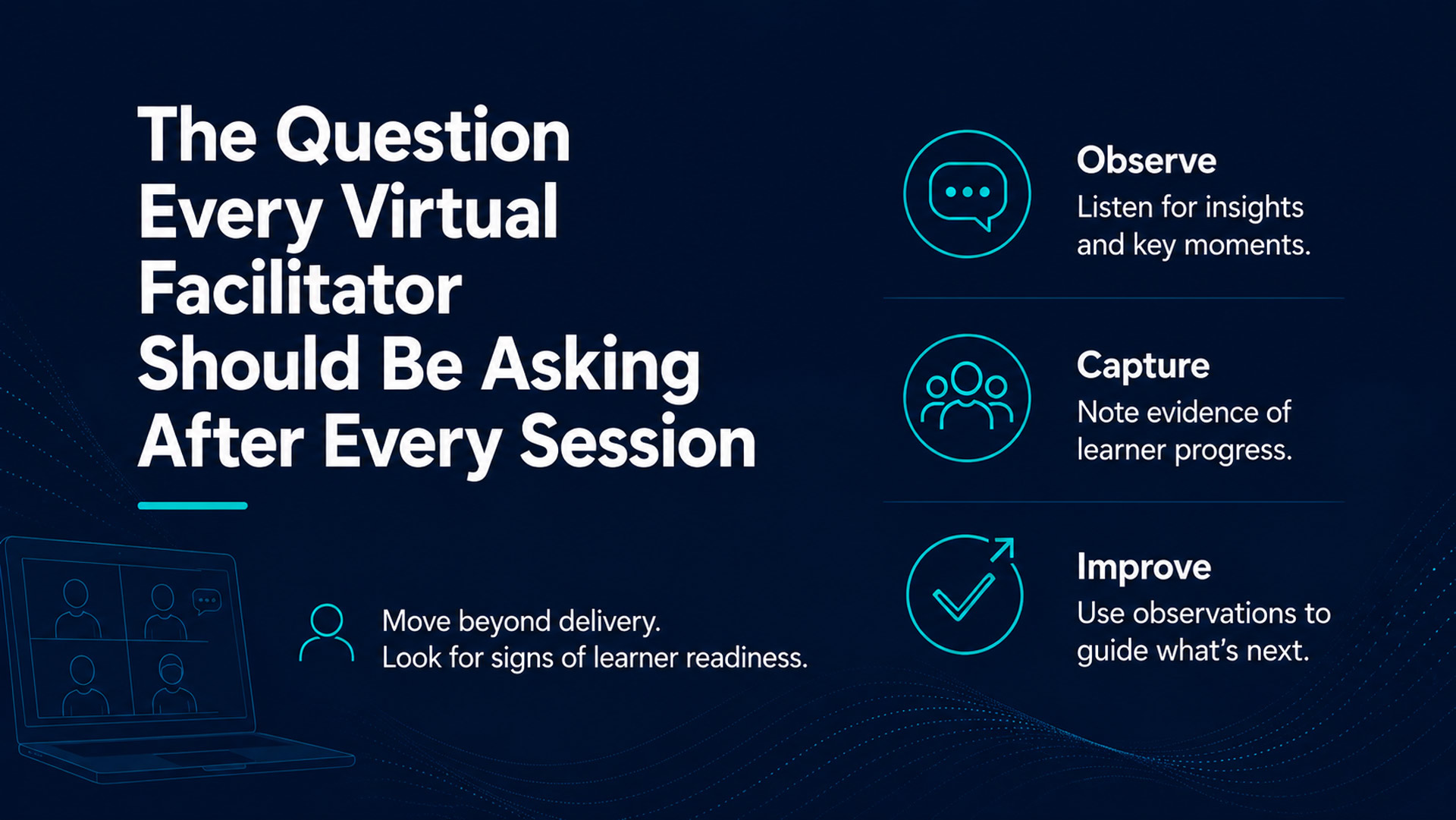
A better question is: what did learners do that showed they were ready to use what they learned? With the latest corporate data indicating that 89% of organizations are deeply concerned about skills agility (specifically, delivering the right skills at the right time for fluid project demands) measuring static attendance is no longer an option.
Shifting to a behavior-based question moves measurement closer to the active work of facilitation, design, and production. The facilitator is not just watching for participation. The producer is not just protecting the platform experience. The designer is not just hoping the activity worked as intended. Together, they are looking for signals that the learning environment is supporting attention, thinking, and application.
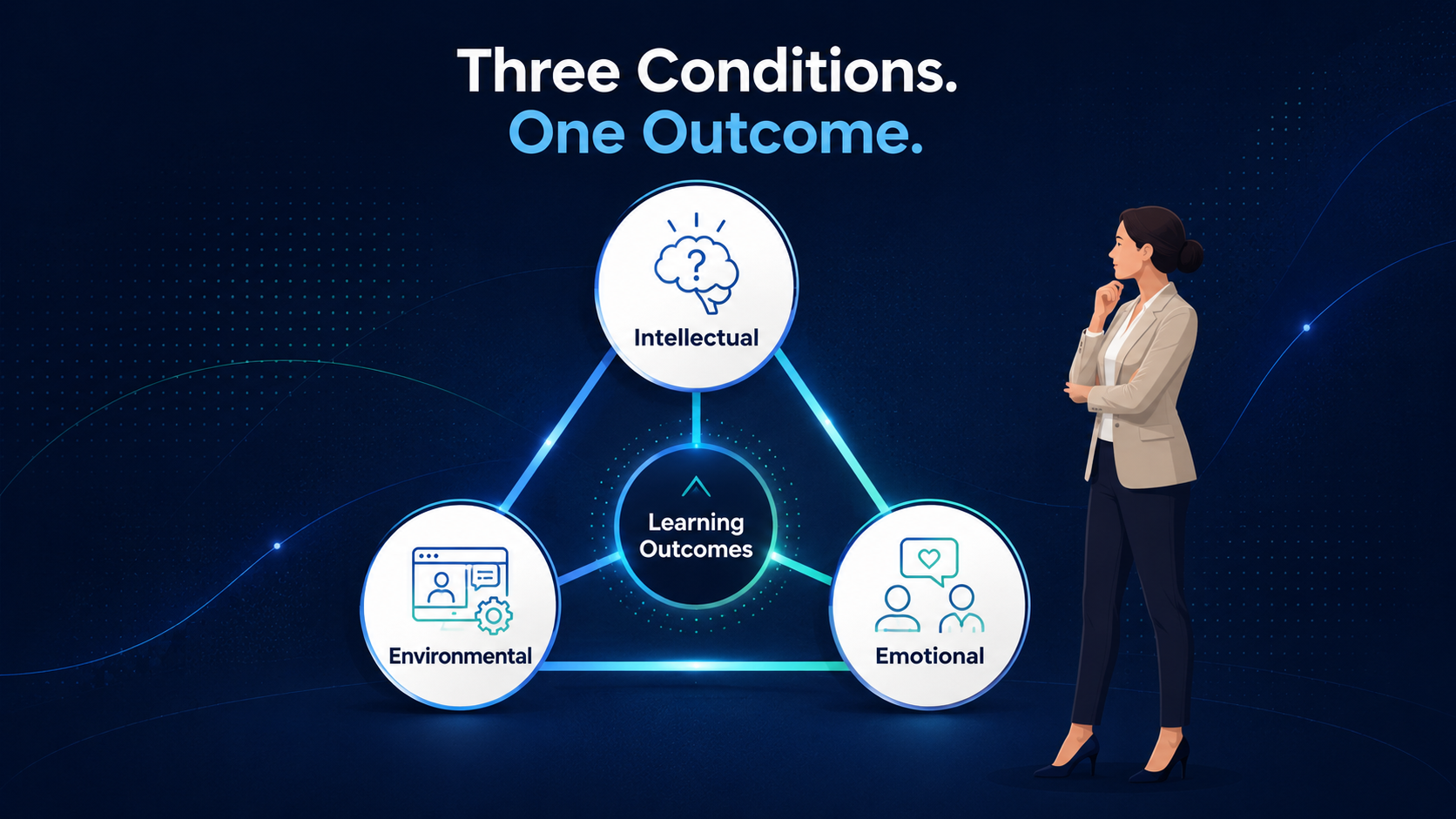
The InQuire Engagement Framework™ helps make those signals visible by looking across emotional, intellectual, and environmental engagement. In practical terms, that means asking whether learners feel safe enough to contribute, whether they are actively processing the ideas, and whether the environment makes participation possible. When one of those dimensions is weak, it shows up quickly: cameras stay off because trust is low, discussion stays shallow because the task is unclear, or a breakout activity stalls because the instructions arrived too fast.
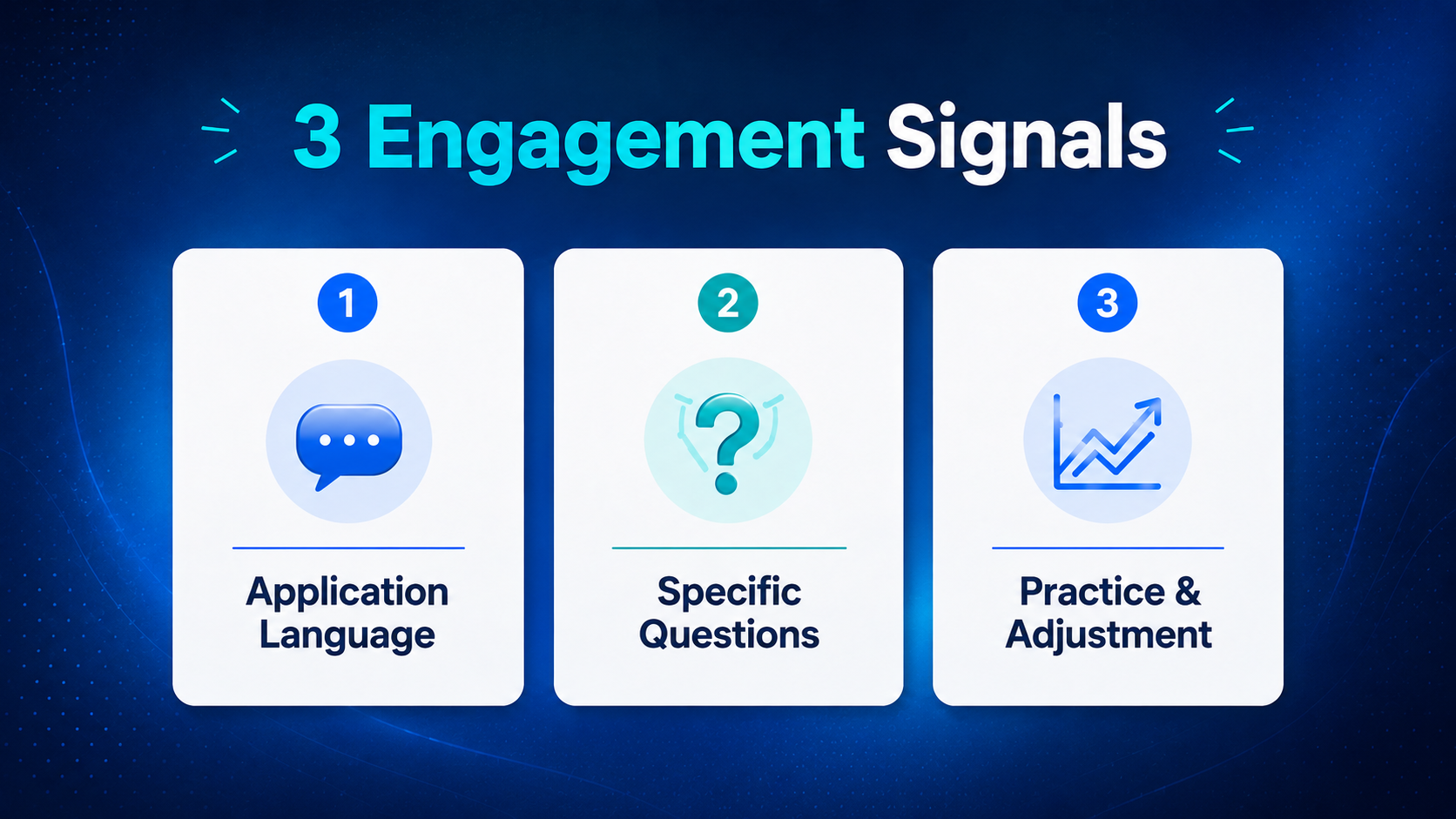
Three Signals to Watch During Live Learning
The most useful engagement signals are observable. A facilitator should be able to name what happened. A producer should be able to recognize where the environment helped or got in the way. A designer should be able to use the signal to improve the next cohort.
Watch for these three signals:
These signals do not require a complicated dashboard to notice. They require shared attention before, during, and after the session. Across large rollouts, the issue is usually not that delivery teams lack data. However, efficiency pressures are mounting; according to ATD’s State of the Industry data, the average formal learning hours utilized per corporate employee dropped significantly to 13.7 hours annually.
With less overall seat time available, every live interaction becomes high-stakes. It is a critical loss when too much of that hard-won behavioral evidence is left behind in facilitator notes, producer observations, chat transcripts, and debrief conversations that never become part of the learning measurement story.
What Practitioners Should Capture After the Session
The post-session debrief is where engagement becomes evidence. If the debrief only asks whether timing worked and whether the technology behaved, the team misses the signals that matter most.
A stronger debrief asks what learners showed: Did they apply the concept accurately? Where did they hesitate? Which activity produced the clearest evidence of readiness? Which moment created confusion that the next facilitator should anticipate?
This typically shows up in small but important delivery decisions. A producer notices that learners needed the activity instructions posted in chat before breakout rooms opened. A facilitator realizes that the strongest discussion happened only after a more concrete workplace example was added. A designer sees that the practice scenario was too simple because every group reached the same answer without much debate.
Those observations are not side notes. They are early indicators of whether learning is moving toward performance. When captured consistently, they help teams improve the program, support facilitators more effectively, and give learning operations a clearer picture of what is happening inside the live learning experience.
Seeing these signals once is a facilitator win. Seeing them consistently, across cohorts and delivery teams, is a capability question, and Jennifer Hofmann's "Live Learning Delivery Capability: Does Your Organization Have It?" walks L&D leaders through the five dimensions that decide whether an organization can produce that consistency.

 Jennifer Lindsay-Finan
 Karen Vieth : Aug 17, 2026, 8:30:02 AM
 Jennifer Hofmann : Aug 3, 2026, 7:00:01 AM