Talking about design and delivery alignment is easy. Proving what it changes in a live learning program is harder.
Most leaders do not need another abstract argument for alignment. Instead, they need to know what improves first, what becomes more predictable, and whether the effort is worth the time it takes to standardize handoffs, clarify design intent, and support delivery teams before the program goes live.
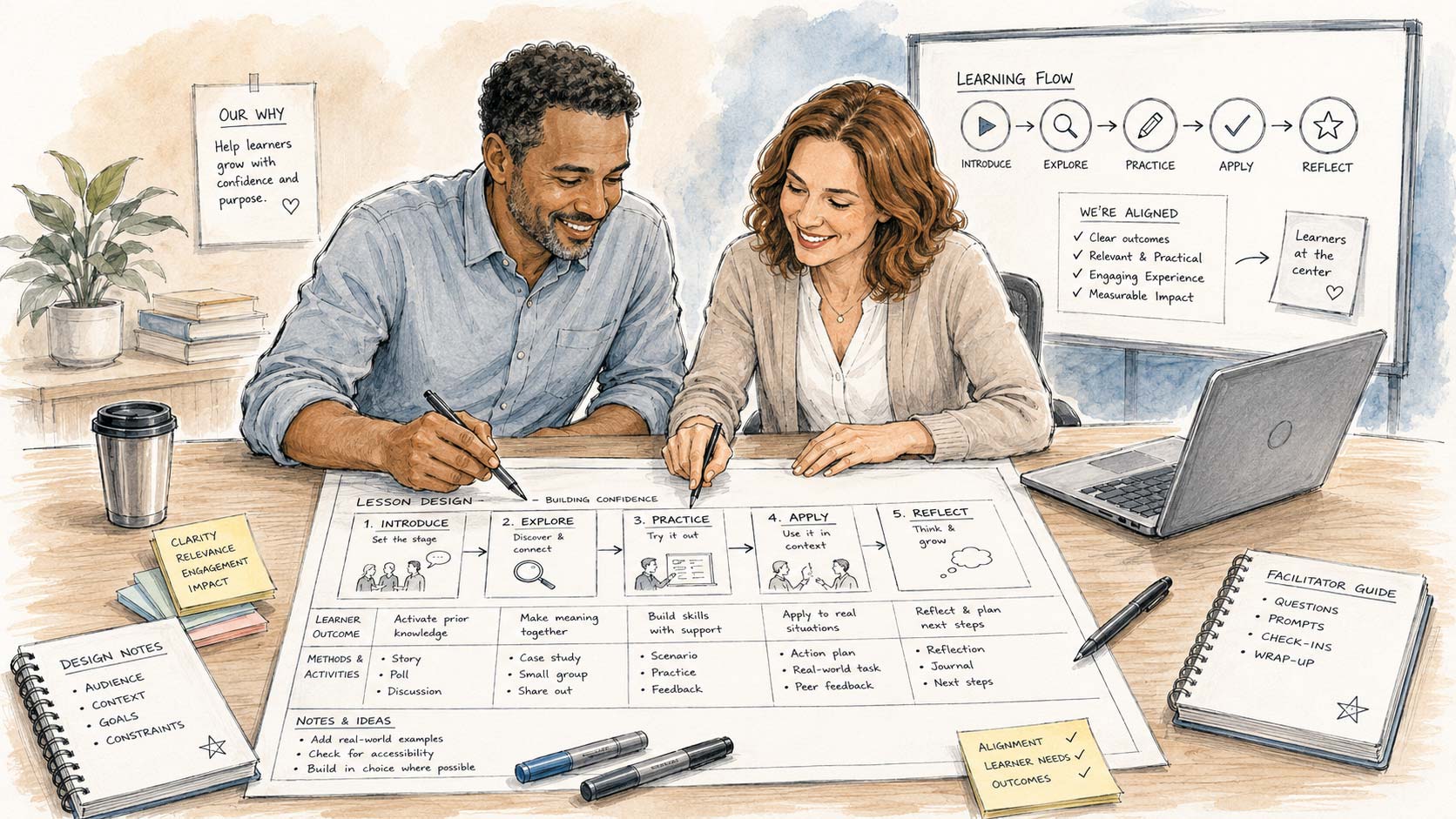
In our work with complex virtual classroom and hybrid learning programs, the pattern is remarkably consistent. When design and delivery are aligned, the first improvement is not usually a dramatic business outcome or a sweeping transformation metric. It is something much more practical: facilitators begin making fewer interpretation decisions in the moment.
While this may sound small, it is often the first visible sign that quality is becoming less dependent on individual heroics and more dependent on a shared system.
Facilitator Consistency Improves Before Anything Else
When design intent is unclear, facilitators do what experienced facilitators always do...they make it work.
One facilitator spends extra time explaining the purpose behind an activity. Another skips that explanation because the timing is tight. A third changes the sequence because the learner group seems quiet. All three may be capable. All three may care deeply about the learning experience. Yet the same program starts to feel different from cohort to cohort.
That is where live learning quality begins to drift.
In a global technology rollout, this often appears when product training is moving quickly and facilitators are asked to deliver before the design team has fully explained why certain practice moments matter. The content may be accurate, but the facilitator is left to infer which activities are essential, which are flexible, and where learners need the most support before applying the new process.
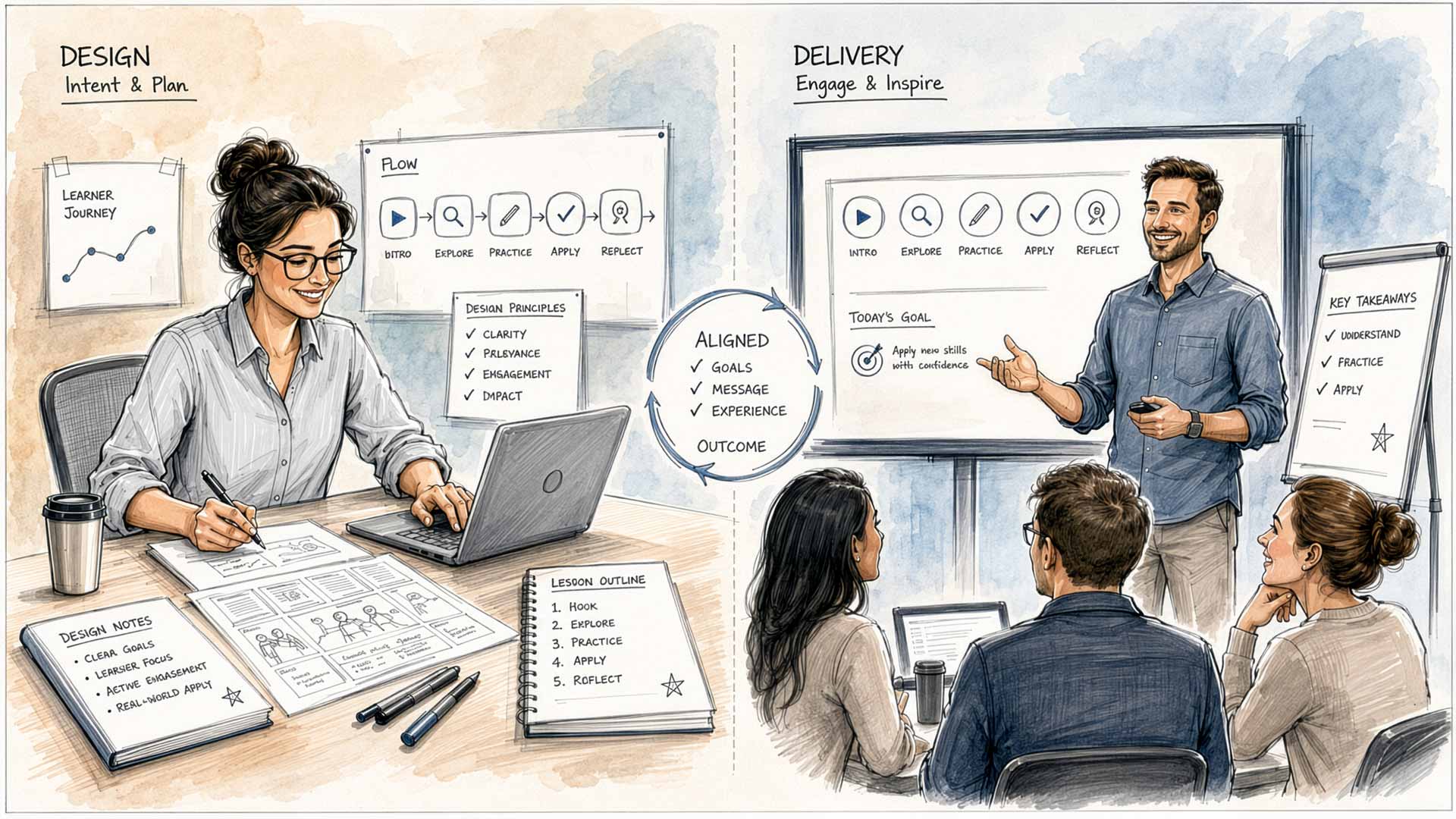
When design and delivery align, these outcomes move from 'individual heroics' to measurable performance. Research shows that organizations using structured alignment tools, like standardized Facilitator Guides and Train-the-Trainer programs, see up to a 30% increase in employee knowledge retention compared to those with fragmented delivery. They still bring their expertise and presence to the session, but they are no longer reconstructing the design in real time.
That is the first improvement leaders should look for: fewer facilitator workarounds, fewer inconsistent explanations, and less variation in how the same learning experience is brought to life.
Producer Stability Follows When the Run-of-Show Is Shared
The next improvement usually shows up in production.
The need for producer stability is underscored by a stark paradox: while 73% of organizations now rely on virtual instructor-led training as a staple, only 27% consider it highly effective. The primary barrier is environmental engagement, which is exactly what a professional producer is designed to safeguard. When breakouts, polls, chat prompts, file sharing, or timing transitions are unclear, the producer becomes another person making last-minute interpretation decisions.
Delivery pressure becomes the most notable outcome here. A producer is trying to manage platform flow while also asking, “Is this breakout supposed to be three minutes or eight?” “Do we bring people back before the debrief question?” “Is this activity optional if we are running behind?” Those questions may look tactical, but at scale they become operational risk.
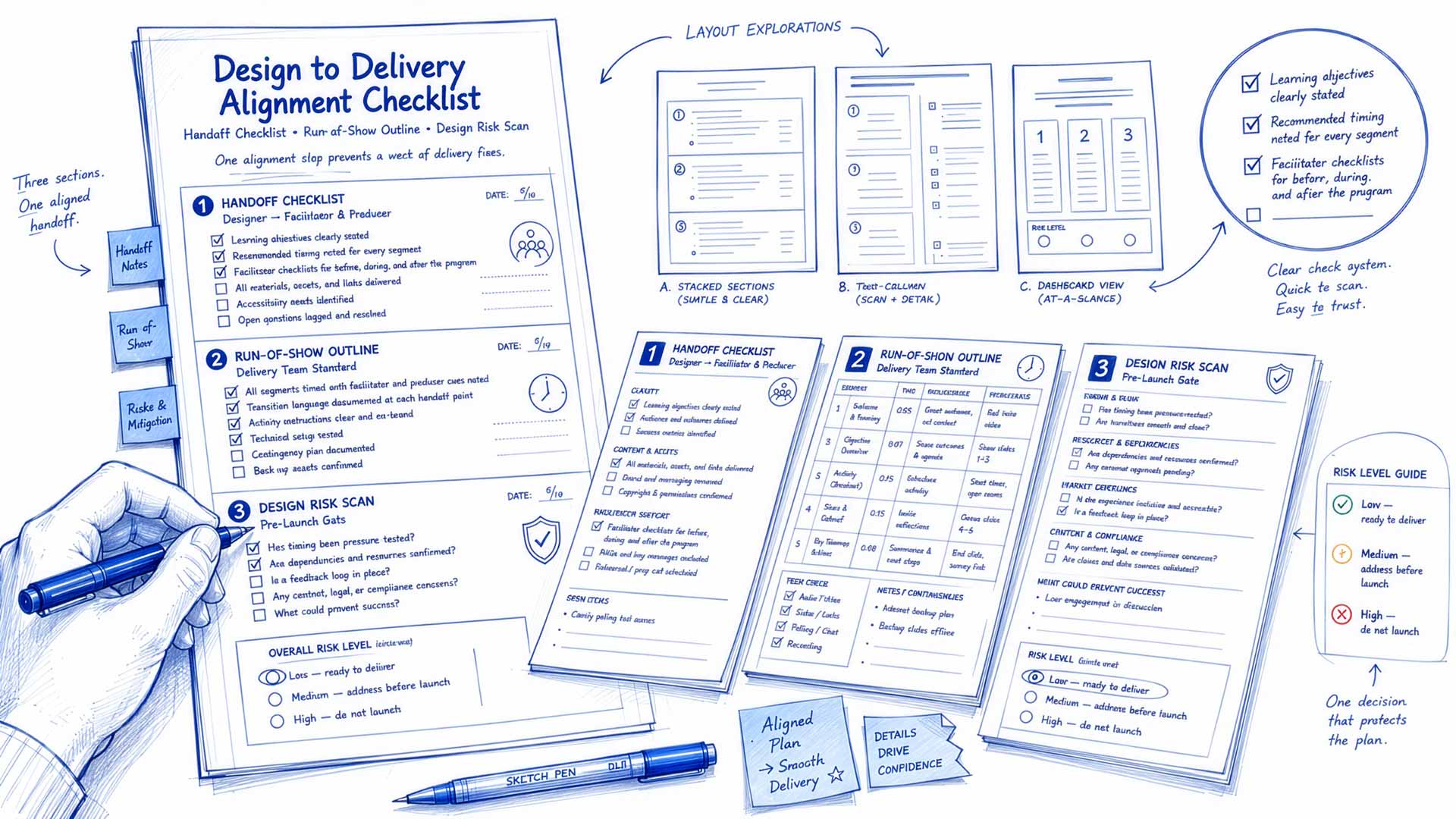
Across large rollouts, standardized run-of-show practices change the producer’s role from firefighting to quality control. The producer can anticipate where learners may need support, where the facilitator may need timing cues, and where the experience needs technical precision to preserve the learning design.
In a healthcare training environment, that stability matters. If clinical staff in different regions experience the same practice activity differently because timing, instructions, or debrief flow varied, the issue is not just session polish. It can affect readiness, confidence, and consistency in how people apply what they learned.
Producer stability is a sign that the delivery infrastructure is working. The session feels smoother because the team is no longer discovering the plan while delivering it.
Learner Readiness Improves When Practice Works as Designed
The third improvement is learner readiness.
This is the outcome leaders often care about most, but it usually depends on the two improvements that come before it. Learners are more prepared when facilitators are consistent and producers can protect the practice moments the design intended.
When those pieces are not aligned, learner practice often becomes the first thing compromised. Activities get shortened, debriefs become rushed, and application questions are skipped to recover time. The session still happens, but the part where capability is built becomes thinner than the design intended.
In financial services programs, that gap can show up as compliance rework. Learners may complete the course, but if the practice was uneven across cohorts, leaders later discover inconsistent understanding, increased remediation, or managers needing to clarify what the training should have resolved.
Strong live learning is not content delivery. It is practice, feedback, dialogue, and application supported by a system that makes those elements reliable. When design intent is explicit and delivery teams understand what each activity is meant to accomplish, learners are more likely to leave with the readiness the program was designed to create.
Alignment is not merely 'coordination overhead'; it is a success multiplier. Data from over 6,000 learning programs reveals that initiatives using 'structured fields' to align design intent with delivery goals are 4x more likely to report success than their unstructured counterparts.
If those patterns are familiar, the next step is not to ask people to try harder. It is to examine the handoffs, design intent, and shared workflows that make consistency possible. Our upcoming webinar will focus on the real case stories behind this shift, told by the facilitators, designers, and producers who lived them. Register now to hear what changed, what improved first, and how teams can begin closing the gap between what was designed and what learners actually experience!

 Jennifer Hofmann
 Jennifer Lindsay-Finan : Jun 8, 2026, 8:00:02 AM
 Karen Vieth : Jun 1, 2026, 8:00:04 AM