
 Jennifer Hofmann
1 min read
What a Real Managed Learning Services Partnership Looks Like
 Karen Vieth : Feb 16, 2026, 8:30:00 AM

L&D capacity is at its limit; it's already affecting quality, consistency, and delivery speed. Many learning teams are supporting virtual classrooms, hybrid programs, and nonstop stakeholder requests without the people, time, or operational systems to keep pace. The pressure keeps rising quietly, but the consequences are no longer invisible across your programs.
Many L&D teams aren’t struggling because they’re doing something wrong, they’re struggling because they’ve been asked to scale faster than their systems, staffing, or support can handle.
This quarter, we’re exploring Capacity Without Compromise—a theme focused on understanding what L&D teams are carrying and how to protect quality without overextending the people who deliver it. And it starts with one simple truth: your team is carrying more than it should, and the hidden cost of overload is now too big to ignore.
The cost of doing everything internally is adding up...slowly at first, then all at once.

Many L&D leaders hoped AI would ease the load, but instead, it created a new expectation: produce more, faster, in more modalities, and with greater consistency. AI accelerates certain tasks, but it doesn’t relieve the strain of live delivery, virtual facilitation, global scheduling, or the emotional toll of constant demand. For a deeper look at how AI is reshaping virtual delivery, see our post on Top AI Insights for Virtual Learning.
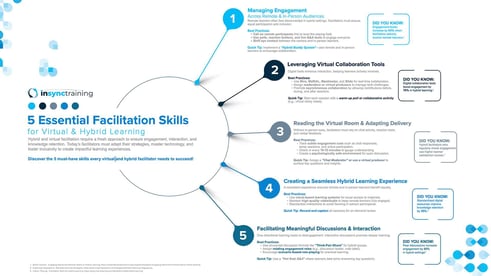
Virtual classrooms still require human presence and judgment and hybrid learning still depends on careful coordination. Learners still expect connection, responsiveness, and a facilitator who can read the moment. If you want to see how this plays out in practice, 5 Essential Facilitation Skills for Virtual & Hybrid Learning is a useful place to start.
AI can support your team, but it cannot carry the weight. Your people are already doing too much, and tools alone cannot change that.
According to Training Industry’s 2025 report, training expenditure rose nearly 5% in 2024–2025, yet only 31% of organizations increased training-staff headcount, and 53% kept staff levels flat. In other words: demand grew, but capacity didn’t. And when demand exceeds capacity, the strain doesn’t stay hidden for long.
For many L&D teams, that imbalance has led to expanding responsibilities without additional personnel, creating a quiet capacity crisis that shows no sign of easing.
Virtual and hybrid learning models place increasing demands on L&D teams with always-on delivery expectations or complex scheduling, production, and coordination requirements. Without additional staffing or operational support, even well-designed programs begin to show signs of strain.
 Teams are stretched across time zones, platforms, and program formats. Virtual classrooms run back-to-back. Blended cohorts require added coordination. If you want to see how these pressures play out in real hybrid programs, our post What Blended Learning Really Means – and How to Design It for Scale offers a clear look at what it takes to manage the complexity.
Fatigue builds, frustration grows, and many teams feel invisible because the organization sees the outputs, not the pressure behind them.
When L&D capacity is exceeded:
You can only rely on heroic effort for so long.
Most leaders only see the surface symptoms: missed deadlines, last-minute scrambles, or uneven virtual classroom experiences. Few calculate what those symptoms truly cost the organization.
These are the real costs of trying to absorb growing demand with the same internal team.
Protecting L&D capacity protects the entire learning ecosystem.
Most internal teams won’t openly express how close they are to the edge. But if you asked privately, you might hear:
“We’re one program away from breaking...”
“There isn’t enough time to prepare well...”
“I’m juggling too many regions...”
“We’re always behind...”
L&D professionals adapt and absorb, yet pressure that goes unaddressed eventually shows up in the learner experience.
You cannot fix capacity until you understand where the strain comes from.
The Virtual Learning Capacity Scorecard helps you:
Identify hidden delivery bottlenecks
Assess team sustainability and burnout risk
Evaluate your ability to scale virtual programs
Understand where quality or consistency may be at risk
Determine whether your current delivery model can meet rising business demands
It only takes a few minutes and gives you a clear baseline for planning, budgeting, and resourcing in 2026.
The pressures affecting your team. Delivery overload, production gaps, scheduling strain, and inconsistent learner experiences are exactly the challenges InSync has spent 25 years solving.
InSync has supported enterprise L&D teams for more than 25 years, stabilizing virtual delivery, reducing burnout, and ensuring consistent global experiences across time zones. Our approach is grounded in the InQuire Engagement Framework™, which strengthens emotional, intellectual, and environmental engagement at scale.
When internal teams are stretched thin, InSync provides:
The goal isn’t to replace your team, it’s to give them the breathing room to deliver quality without compromising their well-being. That’s what Managed Learning Services are designed for: scaling virtual and hybrid learning without added strain.
If your team is nearing its limit, that isn’t a failure. It’s a sign your organization is relying on a small internal group to deliver more than any team can sustain.
This month, take two steps that will help you get in front of the pressure:
Register for our webinar When Scaling Hurts: Why L&D Teams Burn Out (and How to Fix It)
Join InSync’s experts to explore why scaling hurts L&D teams and the practical steps you can take to prevent burnout in 2026.Both steps give you clarity and direction without adding more work to your already full plate.
The rest of the Capacity Without Compromise series builds on this foundation. We will explore the patterns behind capacity gaps and share practical models to increase reliability, strengthen virtual learner engagement, and support your team with systems that scale.
It all begins with one question: What could your team accomplish if capacity stopped being the barrier?

1 min read
Karen Vieth : Feb 16, 2026, 8:30:00 AM
1 min read
Karen Vieth : Nov 3, 2025, 8:00:04 AM
The ROI + Engagement Gap in L&D Technology