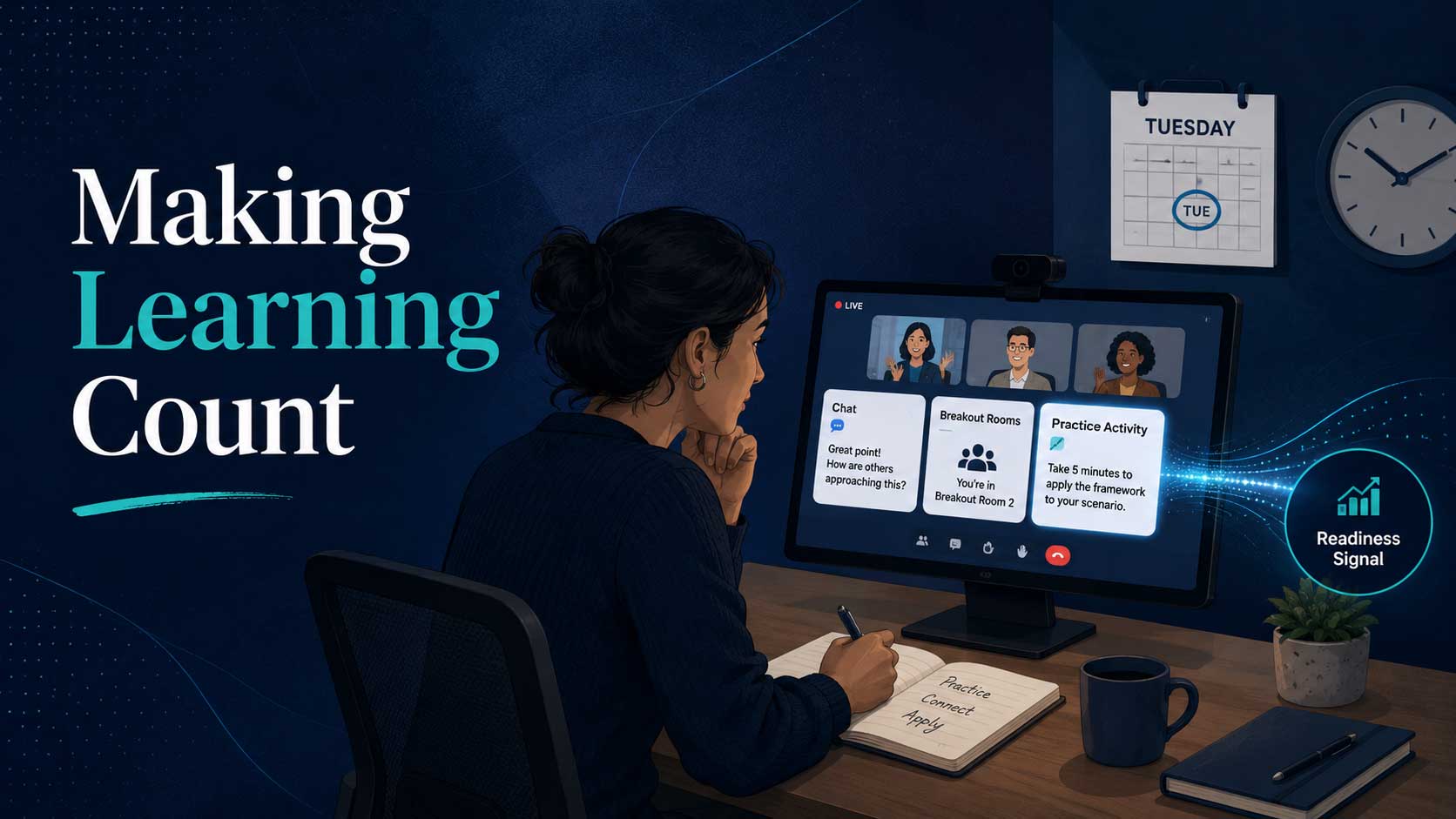
Making learning count sounds like something that happens in a dashboard review, an executive meeting, or a quarterly business update. But in live learning, the evidence starts showing up much earlier than that. It appears on a Tuesday afternoon when a facilitator pauses because the group is repeating the right words but not applying the idea. It appears when a producer notices the same confusion in the chat across three cohorts. It appears when the post-session debrief reveals that learners liked the experience, but still struggled with the moment that mattered most.
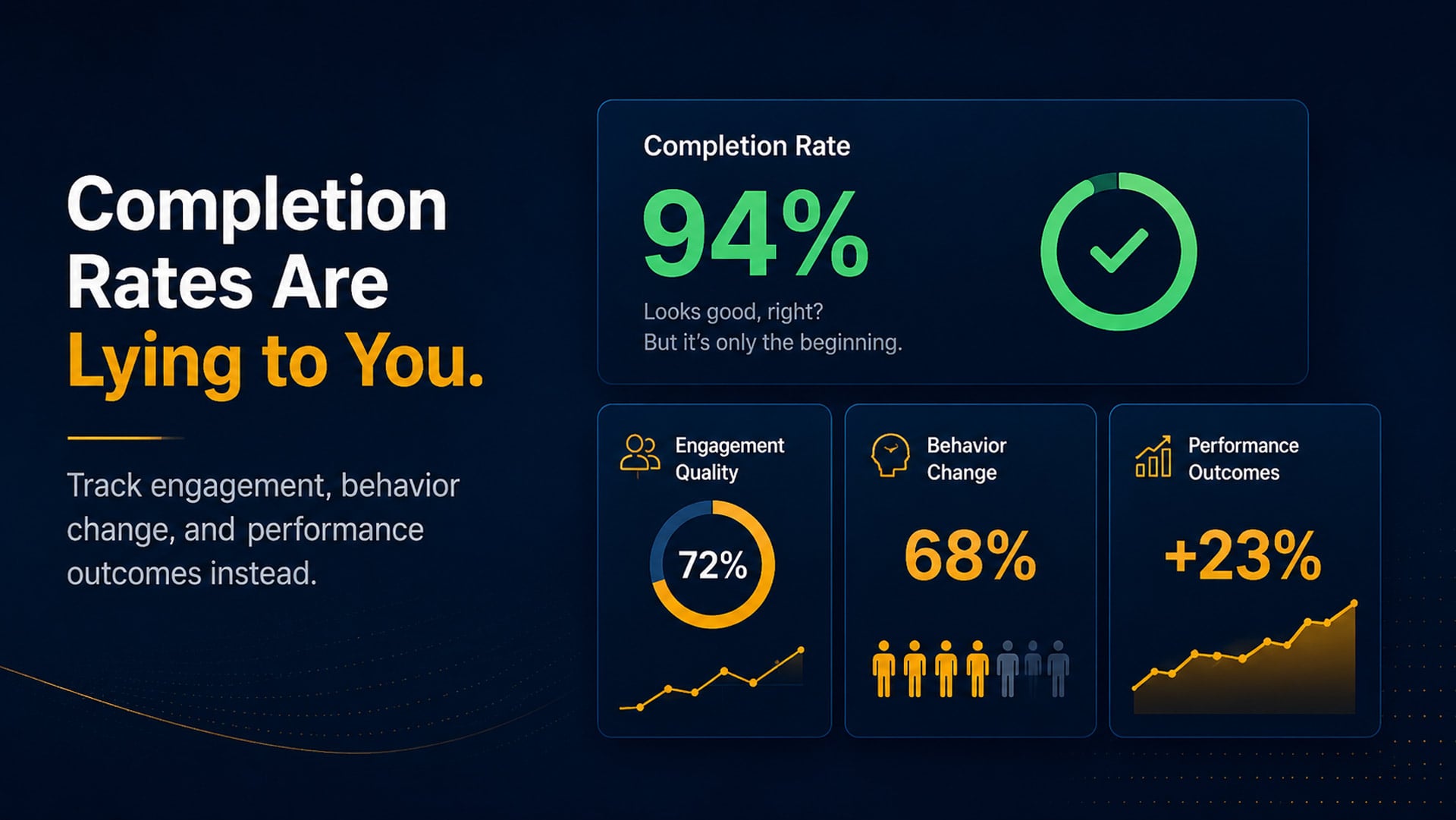
That is where learning measurement becomes real. Not after the program ends, when the only clean numbers left are attendance, completion, and satisfaction. Falling into this trap lands organizations squarely in what Training Industry terms the "activity trap", the counterproductive cycle of measuring program performance by participation volume and smile sheets rather than actual behavioral improvements.
It becomes real in the operating rhythm of the program, when teams are paying attention to what learners are actually doing, saying, practicing, and carrying back to work.
Learning Measurement Starts Inside the Experience
Leaders often ask for better evidence after delivery is complete. The question usually sounds reasonable: What did the program accomplish? The problem is that many programs were never designed to answer that question while the learning was happening.
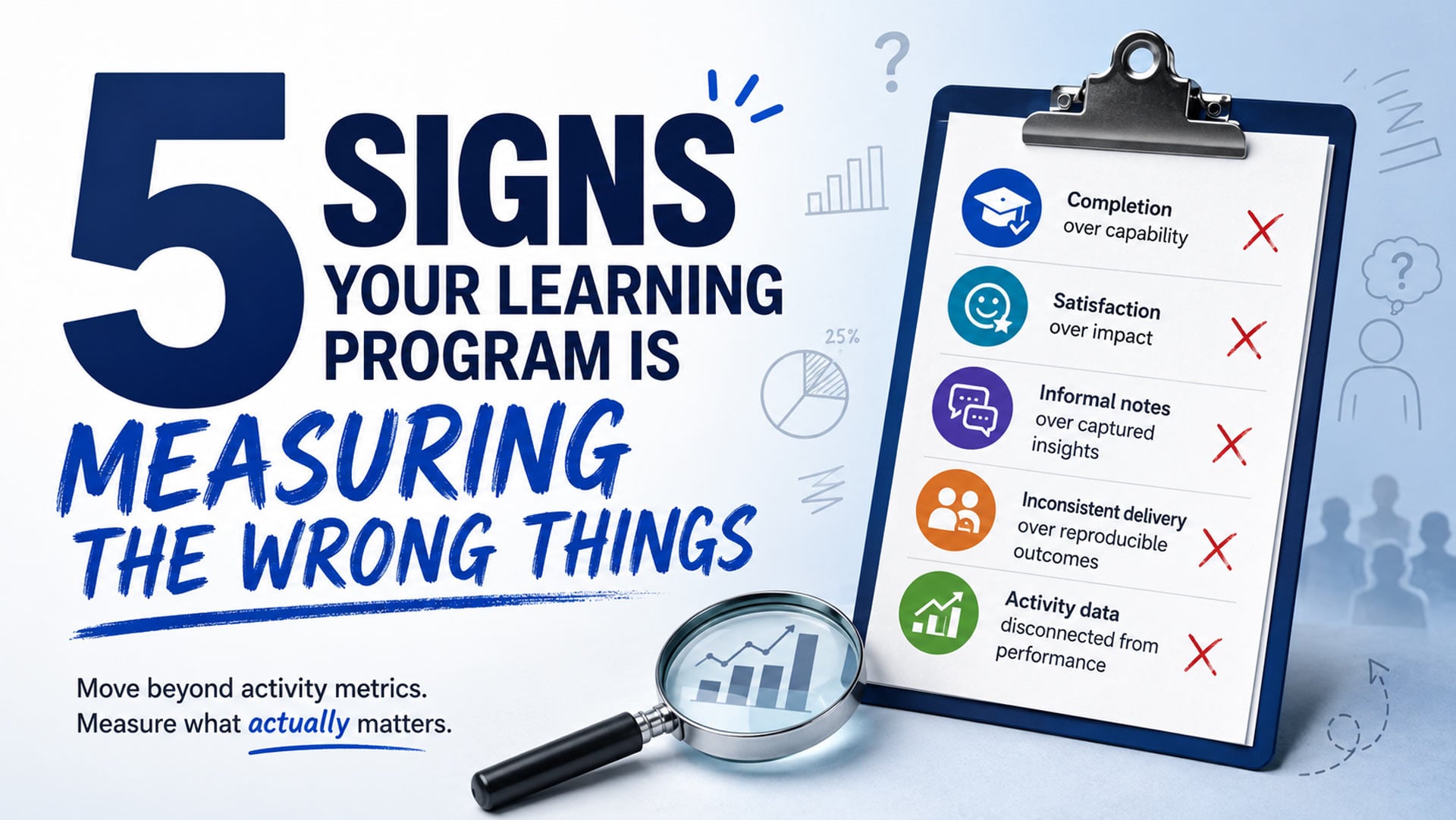
If the facilitator guide only tells someone what to cover, it will not help them notice whether learners are building capability. If the producer run-of-show only tracks timing and transitions, it will not capture whether the environment helped or blocked participation. If the post-session survey only asks whether the session was useful, the team may miss the difference between appreciation and application.
In complex virtual learning environments, one of the first patterns we see is that useful evidence is often present, but unmanaged. A learner asks a question that reveals a policy is unclear. A breakout group completes the activity but cannot explain the decision behind its answer. A manager reports two weeks later that the same coaching conversation is still being avoided. Each signal matters, but unless the system is built to catch it, the evidence disappears into the workday.
What Counts as Evidence on an Ordinary Delivery Day?
Evidence does not have to be dramatic to be useful. In live learning, it often begins as a visible shift in learner behavior. The first practice attempt sounds scripted, but the second attempt uses the learner’s own words. Early questions are about instructions, but later questions are about real exceptions. A quiet group starts contributing after the facilitator reframes the scenario around a situation they recognize from the job.
That is the kind of evidence leaders should want because it shows movement toward performance. It is also the kind of evidence that disappears when measurement is treated as a reporting task instead of a delivery discipline.
Across multi-cohort rollouts, this becomes especially important. One cohort may finish energized because the facilitator knows how to draw out application. Another may leave confused because the same activity was rushed, the scenario was not grounded, or the producer was not positioned to protect the learning environment. The dashboard may show both sessions as complete, but the learners did not experience the same program.
Making learning count means looking for the difference between a session that ran and a learning experience that produced readiness. That difference is visible in practice quality, question depth, facilitator observations, producer notes, manager feedback, and the way learners handle realistic decisions during the session.
The Tuesday Test for Learning Leaders
The practical test is simple: could your team tell, during an ordinary delivery week, whether the program is working?
Not whether it launched. Not whether people attended. Not whether the average rating was acceptable. Could the team point to evidence that learners are becoming more capable? Passing this test is remarkably rare; LinkedIn Learning reports that a mere 8% of L&D professionals feel highly confident in their ability to evaluate the true business impact of their programs, proving just how fragile our traditional post-hoc metrics truly are.
In our work with global programs, the organizations that answer that question well have a different operating rhythm. Facilitators know what readiness signals to watch for. Producers know which environmental issues affect learner participation. Designers review delivery feedback before the next cohort, not after the initiative is already over. Learning operations teams can see where quality is consistent and where the program is being held together by individual heroics.
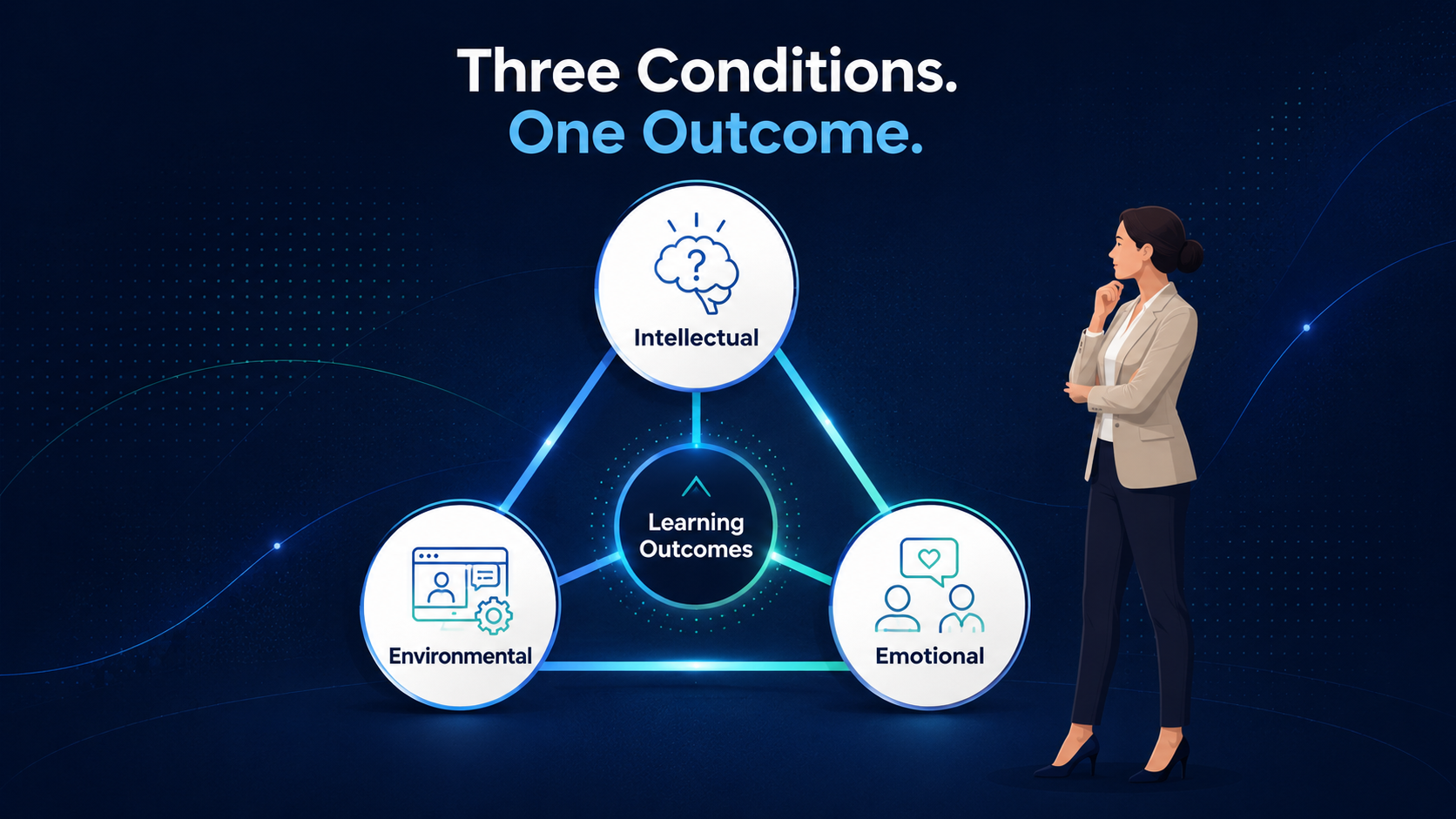
This is where our Live Learning Formula™ becomes more than a model. Design, facilitation, production, and continuity have to operate as one system because measurement depends on all of them. A strong design creates opportunities for application. Skilled facilitation reveals whether learners can use what they are learning. Production support protects the conditions that make participation possible. Continuity turns session evidence into insight the organization can act on.
What Leaders Should Examine Now

 Jennifer Hofmann
 Karen Vieth : Jul 13, 2026, 8:00:04 AM
 Jennifer Lindsay-Finan : Jul 6, 2026, 8:00:03 AM