
1 min read
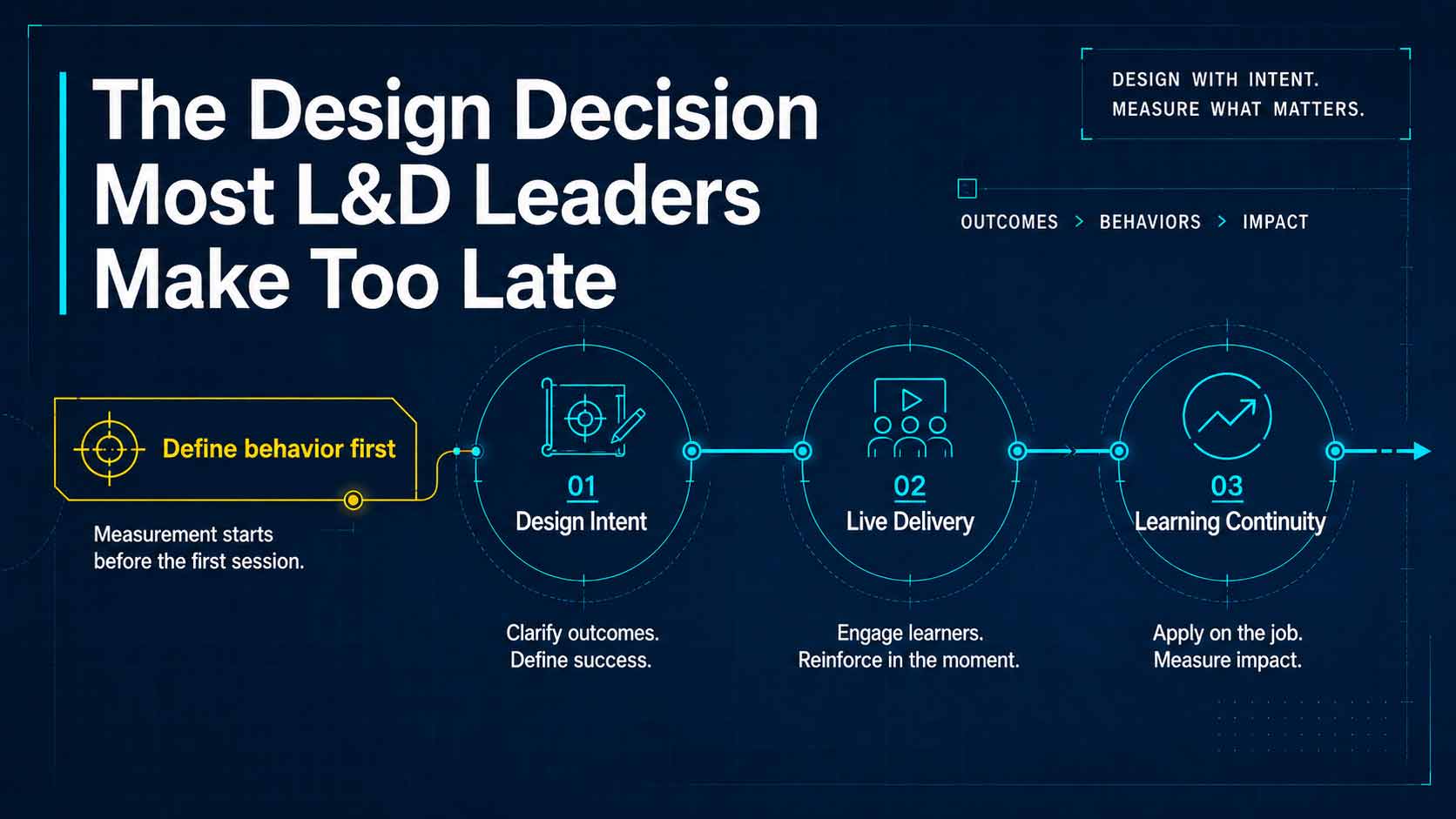
The Design Decision Most L&D Leaders Make Too Late
 Karen Vieth : Jul 7, 2026, 8:00:00 AM
9 min read
 Jennifer Hofmann
:
Oct 5, 2026, 12:00:00 PM
Jennifer Hofmann
:
Oct 5, 2026, 12:00:00 PM
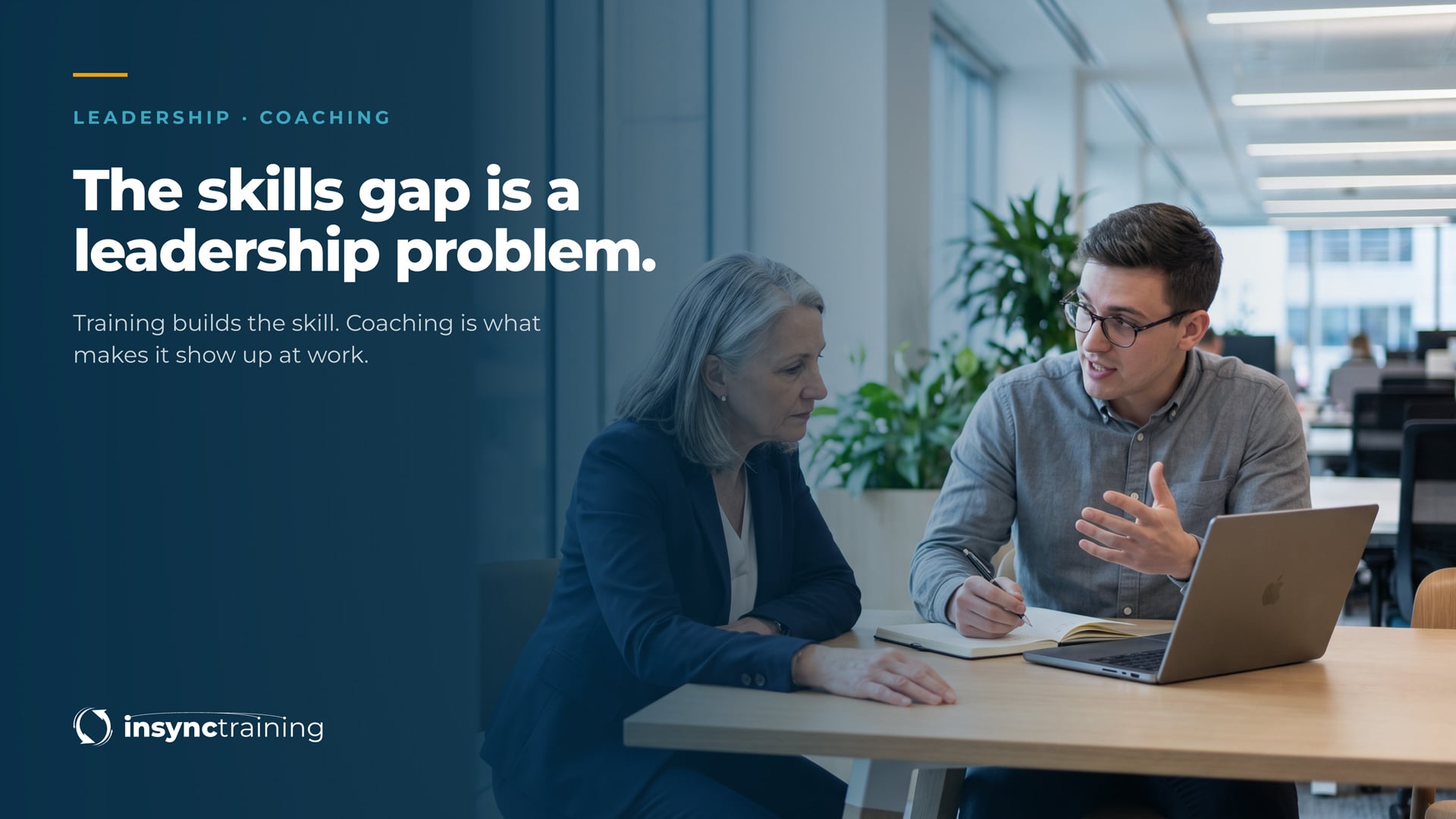
The skills gap won't close because L&D runs a program alone. It closes when training creates capability and leadership coaches people to apply what they learned.
Jennifer Hofmann
Author
For the past three years, the skills gap has dominated boardroom conversations. And for good reason. According to Unboxed's research on skill development in an enterprise context, which synthesizes data from industry leaders including the Conference Board, Deloitte, McKinsey, and others: 71 percent of CEOs cite the talent shortage as their top strategic threat. The cost of inaction sits at $8.5 trillion in lost economic value. And 63 percent of organizations identify capability gaps as their primary barrier to growth.
Percentage of leadership identifying critical talent and capability barriers
The cost of inaction sits at $8.5 Trillion in lost economic value.
Yet most organizations are still approaching this problem the same way they always have: by running training programs.
This is not an argument against training. Training creates awareness. It provides a controlled space to practice. It equips people with frameworks and language they wouldn't otherwise have. All of that matters.
But here's what the data shows: skills learned in training don't transfer to the job automatically. There's a gap between what people learn in a workshop and what they do every day under pressure. That gap is where capability dies.
The skills gap won't close because L&D runs a program alone, or because training exists in isolation from the work. It closes when training creates capability and leadership coaches people to apply what they learned. Training plus coaching partnership is what closes the gap.
Organizations invest heavily in learning programs. They should. But according to Unboxed's research synthesis, which includes data from the Association of Talent Development, only 4 percent of L&D leaders report excellence in learning analytics and competency assessment. That means the vast majority of organizations can't measure whether trained skills show up in real work.
The Unboxed synthesis, drawing on Deloitte's research on organizational agility, tells part of the story. 85% percent of organizations say they need agile work models. Only 19 percent believe their traditional approaches to building capability are working. The gap isn't a training design problem. It's an application problem.
When training ends and people go back to work, nobody asks them to apply what they learned. They default to old habits because old habits are faster and ingrained, and there's no one pushing back. The skill atrophies. The training investment disappears.
According to Unboxed's synthesis of McKinsey's research on skill development, high-performing organizations do something different: seventy-two percent integrate skill development into daily operations, not as a separate initiative—woven into the work itself. That integration is coaching.
When a leader coaches after training, they do three critical things:
Blanchard's research offers a clear window into what coaching does. The organization conducted a study with approximately 1,850 professionals across management and individual contributor roles, examining the correlation between coaching behaviors and trust, positive affect, and work intentions.
The findings were striking. The correlation between coaching behaviors and trust was .854—extremely large. Leaders who are perceived as coaching are trusted at a fundamentally different order of magnitude. Coaching behaviors, as Blanchard defines them, center on three practices: facilitation (acting as a sounding board, helping others develop ideas), inspiration (expressing confidence in someone's ability to improve), and guidance (providing feedback and constructive direction on areas for growth).
Why does this matter for transfer? Because trust enables the vulnerability required to apply new skills. Trying something different in front of your boss requires psychological safety. Coaching builds that.
Gallup's research on employee engagement corroborates the mechanism. Employees who receive weekly feedback show nearly perfect engagement levels—80 percent full engagement. Weekly coaching conversations signal that leaders are invested in someone's growth and application, not just task completion.
Unboxed's research synthesis also includes a case study of one organization that embedded coaching into their reskilling initiative for leaders at scale. The result: a 20 percent lift in skills performance plus a 40 percent increase in coaching efficiency compared to a program-only approach. The skill wasn't new. What was new was the support system for applying it.
Leaders coached their people on using the skill. People applied it. Capability stuck.
This is what transfer looks like: someone completes a delegation training. Three months later, because their leader coached them on it weekly, they've successfully delegated three projects, built confidence in a junior manager, and freed up time for strategic work. That's not just a training win. That's a business outcome.
They require different players with clear, intentional handoffs.
L&D's job is to design training that addresses real capability gaps, create space for practice within the program, equip people with frameworks and tools, and measure what people learned. That job is critical. And it's not enough by itself.
Leadership's job is equally critical, and it's often missing: create expectation that the new skill will be used, coach people on applying it, normalize failure and iteration, hold accountability for application rather than completion, and connect application back to real work outcomes.
Here's what happens when these jobs are siloed: L&D designs a program on delegation skills and hands off completion certificates. No one asks leaders to coach during the transfer phase. People finish training. No one asks them to delegate differently. They go back to doing the work themselves because it's faster and there's no pressure to change. Capability doesn't shift. The gap remains.
Here's what happens when the partnership works: L&D runs the delegation program and briefs leaders on what their people will learn and what they'll coach on. After training ends, leaders commit to coaching their people on delegation over 90 days. Let's practice together. What are you delegating? What's the barrier? How will you know it worked? That coaching happens weekly, structured, with real expectation behind it. That's when the 20 percent skills lift happens.
Coaching conversations have four essential elements. Leaders who practice these don't just support training transfer—they accelerate judgment development, which closes capability gaps.
Listening isn't agreement. It's curiosity. Effective coaches listen to understand what's actually happening on the job, what the barriers are, what the person tried and what didn't work. In high-pressure environments, leaders default to telling. Telling creates compliance. Listening surfaces the real obstacles.
Open-ended questions draw thinking out of people. What's the barrier to using this skill? versus Didn't the training cover this? shifts the conversation from judgment to discovery. Questions focused on what and how rather than why keep conversations forward-looking and blame-free. Questions force people to think through how to adapt training to their reality.
Candor with care. When leaders give feedback on application with respect for the person, that feedback becomes actionable instead of defensive. But this only works if you've done the listening and inquiring first.
Not empty cheerleading. Specifically acknowledge someone's strengths and previous successes, and express belief in their capacity to apply new skills. Applying new skills feels risky. People need to know their leader believes they can do it and will support them through stumbling.
If someone trained on delegation isn't delegating, listening reveals why: I tried delegating this project and the person missed the deadline. Now I don't trust them. Training says delegate more. Listening asks what happened and uncovers the real issue. That's where the coaching begins.
How would that skill work with your team's structure? What would have to be different for you to try that approach? These questions build judgment about when and how to apply what they learned. They develop decision-making capacity, not skill replication.
A leader can say: I notice you're not using the delegation approach we trained on. I want to support you getting there. What's the real obstacle? If you haven't listened to understand the barriers, your feedback lands as judgment. If you haven't asked questions that surface their thinking, your direction sounds like telling. Listen and inquire first, earn the trust, then tell the truth.
I know delegation feels uncomfortable. You've successfully led projects solo your whole career. But I've seen you mentor others effectively. This is an extension of that skill. Let's practice together. That's confidence-building that anchors in reality.
These four practices work in a rhythm. Blanchard describes it as a four-phase coaching process: Connecting (showing you care and have their back), Focusing (identifying the real application barrier), Activating (collaborating on how to apply what they learned), and Reviewing (checking in on how it went, what worked, what to adjust). This rhythm is what separates coaching from mentoring or casual feedback, and it's what makes it work.
The data is clear: training plus coaching works. Yet most organizations don't do this partnership. Arnott and Sparrow's research with over 1,100 organizations found that only 5 percent reported having trained their managers to coach, despite 73 percent recognizing coaching as a top leadership need. Most managers spend less than 10 percent of their time coaching, even in organizations where reskilling is urgent.
Three barriers explain why.
The good news: this is fixable. Training leaders to coach can happen fast—unlike building a better training program, which takes months. Once leaders understand that coaching accelerates results and closes gaps faster, they adopt it.
This partnership delivers measurable, faster results than training alone.
Immediate engagement gain comes first. Weekly coaching conversations move the engagement needle significantly. Engaged employees apply new skills faster, mentor others on what they learned, and stay longer—which means your training investment sticks with people who know how to apply it.
Application acceleration follows. Training teaches the skill. Coaching teaches judgment about how to apply it in context. Judgment development happens through questions and feedback over time, not in a classroom. It compounds.
The compounding effect is where organizations see real returns. A leader who coaches doesn't just develop one person faster. They model coaching for the team, create a feedback-rich culture, and build promotion-ready talent at higher velocity. This multiplies across the organization.
Axalta's 20 percent skills lift happened and stuck because coaching made people accountable for application, not just comprehension. The 40 percent coaching efficiency gain means the same time investment yielded faster competency growth. That's not just faster—it's more sustainable.
Against the cost of inaction, the math is stark. According to Unboxed's research synthesis: 63 percent of organizations are blocked by capability gaps, and 71 percent of CEOs cite talent shortage as their top threat. The cost of not doing this partnership—leaving training investment without coaching support—is massive in both immediate and opportunity terms.
Closing the skills gap requires L&D and leaders to shift how they work together. It's not complicated, but it is intentional.
For leadership, three moves matter.
First, adopt a coaching mindset. Shift from I solve problems to I help them solve problems. Shift from Does this person know X? to Can they apply this skill under pressure? This is ruthlessly focused on building capability and closing gaps faster.
Second, make coaching part of the role. If coaching bridges training and application, it has to be in the job description and the performance review. Leaders who integrate skill development into daily operations do so intentionally. They schedule it. They plan for it. The Blanchard research shows that focusing alone can take 20 minutes. Leaders need permission to go slow and do this well.
Third, get trained yourself. Leaders can't coach what they don't know how to do. This requires formal training in coaching skills, not just management skills. This is an investment in your leadership bench—leaders who can coach are leaders who can develop talent fast, retain people, and close capability gaps.
For the organization, three moves enable this to scale.
First, align L&D and leadership on accountability. Build a handoff where L&D says here's what they learned, here's what we're coaching on and leadership says here's my plan to coach them to apply it, here's how I'll measure application. Measure transfer, not just training attendance.
Second, build the coaching structure. Equip leaders with coaching training designed for your context and skill challenges. Create check-in cadences where leaders report on coaching conversations and application progress. This isn't surveillance. It's accountability for the partnership.
Third, connect coaching to outcomes. Tie coaching practice to leadership reviews. Track the skills lift that comes from coaching. Show the connection between coaching and engagement, retention, and capability growth.
The skills gap didn't emerge because training programs got worse. It emerged because organizations separated training from work. They built capability in classrooms and hoped it would transfer. It doesn't, not without coaching.
This isn't a problem that L&D alone can fix. And it's not a problem that leaders alone can fix. It's a partnership problem.
That partnership is exactly what we build at InSync. We work with leadership teams and L&D functions to train leaders in the coaching skills and mindset that accelerate transfer. We facilitate coaching conversations and model the practices in context. We help L&D and leadership build joint accountability for application and integrate coaching into your reskilling initiatives so training investment actually sticks.
If your organization is serious about closing the skills gap, you need training. And you need coaching. You need both. The question isn't which one. The question is: how do we do them together?
Coaching Services: Explore how we train leaders in coaching skills and build the partnership between L&D and leadership.
A Quick Guide to Upskilling and Reskilling: Practical frameworks for planning reskilling initiatives that stick.
 Read More
1 min read

1 min read
 Jennifer Hofmann : Jun 10, 2026, 8:30:01 AM